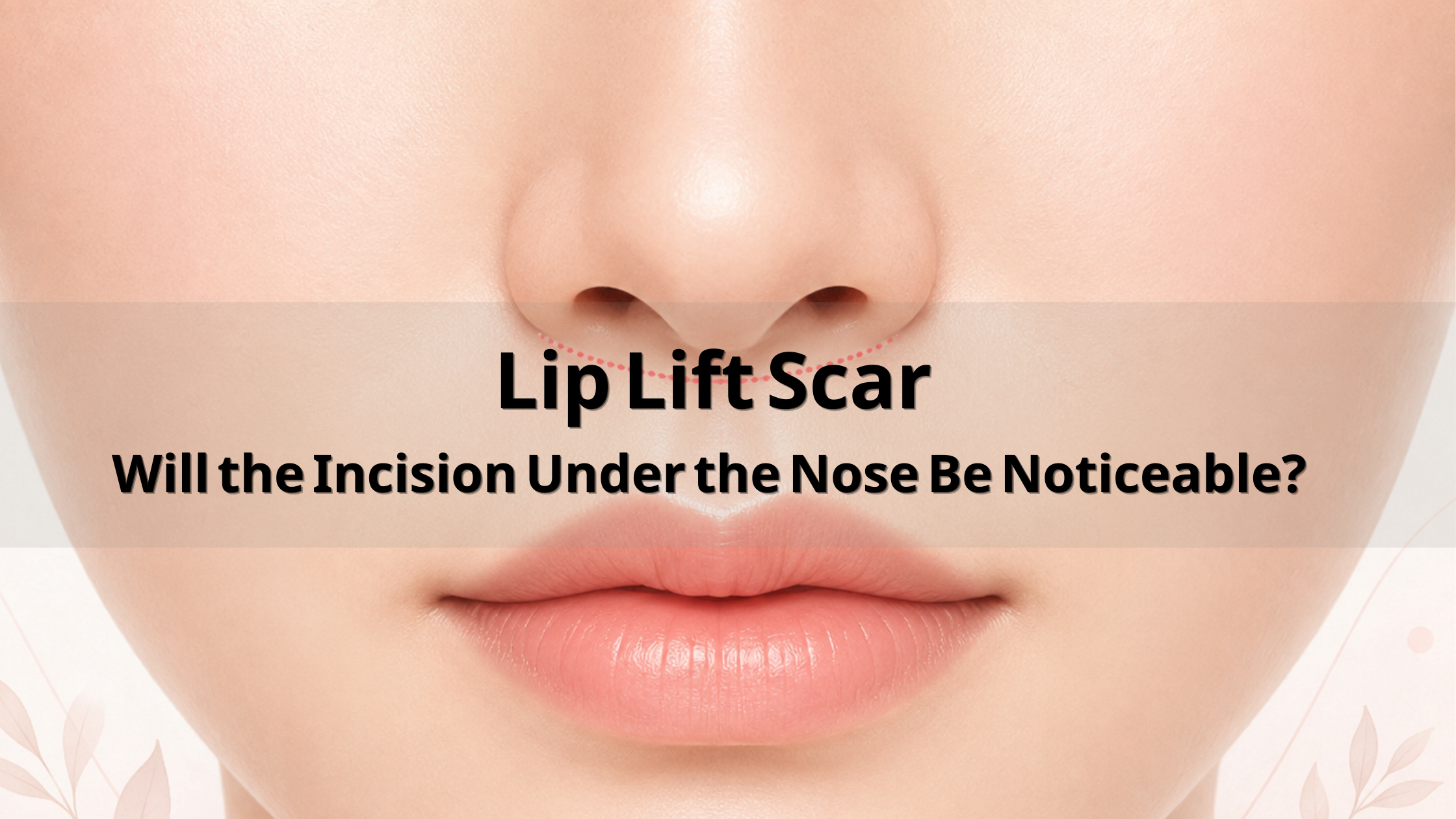
For most people considering a lip lift, the thing that keeps them hesitating until the very end is the scar. The area under the nose sits at the center of the face, where neither hair nor clothing can hide it. "Am I about to put a permanent scar in the middle of my face?" is the biggest psychological hurdle of this operation. The short answer: the lip lift incision is designed to sit at the base of the nose, a position easily hidden in the nose's shadow, and in most cases it matures over time into something hard to notice. The final state, however, depends on multiple factors, including incision design, suturing precision, skin type, and aftercare, and individual variation is real. This article answers the scar question head-on: where the incision goes, what separates a visible scar from an invisible one, what to do about redness or raised scarring, and how the scar relates to your pores and the shape of your nose.
The Short Answer: Scar Essentials at a Glance
The sections below go through each in detail.
Where Does the Incision Go? A Position Hidden in the Nose's Shadow
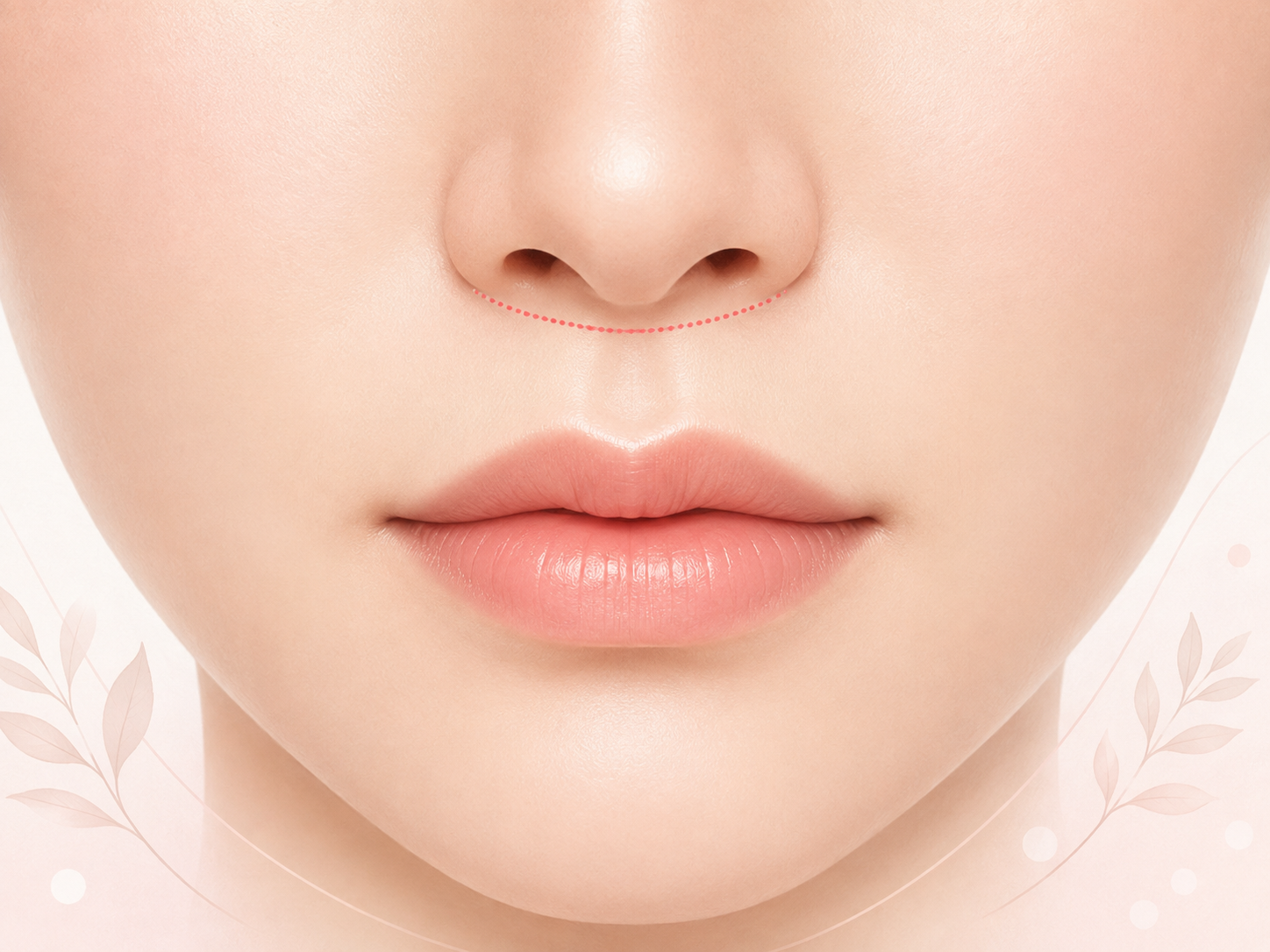
The lip lift incision runs along the base of the nose, following the boundary from the base of the columella along the rims of the nostrils. There is a reason this position is chosen: the junction between the nose and the skin of the lip is naturally a place of contours and shadow, so the scar line blends into a boundary that already exists.
Seen from the front, the base of the nose falls inside the nose's own shadow, so at everyday distances the scar rarely enters anyone's line of sight. Tilt the head back, or view the face from directly below, and light reaches the incision line more easily. The accurate way to understand it is not "invisible from every angle" but "designed to sit in shadow in the vast majority of everyday situations."
How the Scar Evolves: Redness Means "Still Healing"
The scar's journey does not end at suture removal. Right after the sutures come out, the scar is red, a normal reaction caused by capillaries multiplying during healing. The redness turns pale pink over the following months and typically matures to a whitish, inconspicuous state around 3 to 6 months.
What matters is not to misread this interim redness as a sign of failure. As a rule, the final judgment on a scar waits until it has matured. That said, redness that keeps deepening or spreading is outside the normal course; have it checked, along with the warning signs described below.
The Five Factors That Decide Whether a Scar Shows
The same operation can produce different scars. The dividing lines are mainly these five.
1. Incision design. How faithfully the incision follows the natural curves of the columella and alar rims determines how well the scar blends into the existing boundary. The principle is not a straight cut but a design matched to the contours of each person's nose.
2. Suturing precision. The more carefully the skin layers are aligned and closed, the finer the scar. Suturing in stages from the deep layers upward relieves the load on the surface skin, and that is what produces a thin scar line.
3. Wound tension. If the amount removed exceeds the skin's slack, the suture line is under constant pull, which widens scars. Designing an appropriate removal amount protects the scar as much as it protects the result.
4. Skin type and constitution. People whose scars tend to stay red, or who are prone to hypertrophic scars or keloids, carry a higher risk of a visible scar. How your past injuries and operations healed is valuable information, so always share it at your consultation.
5. Aftercare. UV exposure, friction, and smoking are the classic causes of pigmentation and delayed healing. Whether you can keep up the prescribed care (ointment, taping if directed) and sun protection also shapes the outcome.
Pores and Nose Shape: What Decides How Well the Scar Blends
How well a scar "blends" also depends on the individual character of your skin and nose.
The pore factor. The skin under the nose has some of the most visible pores on the face. A matured scar becomes white and smooth, which can create a subtle texture difference against the surrounding pored skin. In most cases this is perceptible only up close and under particular lighting, but knowing that the question is not just "will a line remain" but "will the texture blend" helps set expectations accurately. For men, the position of beard follicles relative to the incision is also a design consideration, so raise it in advance.
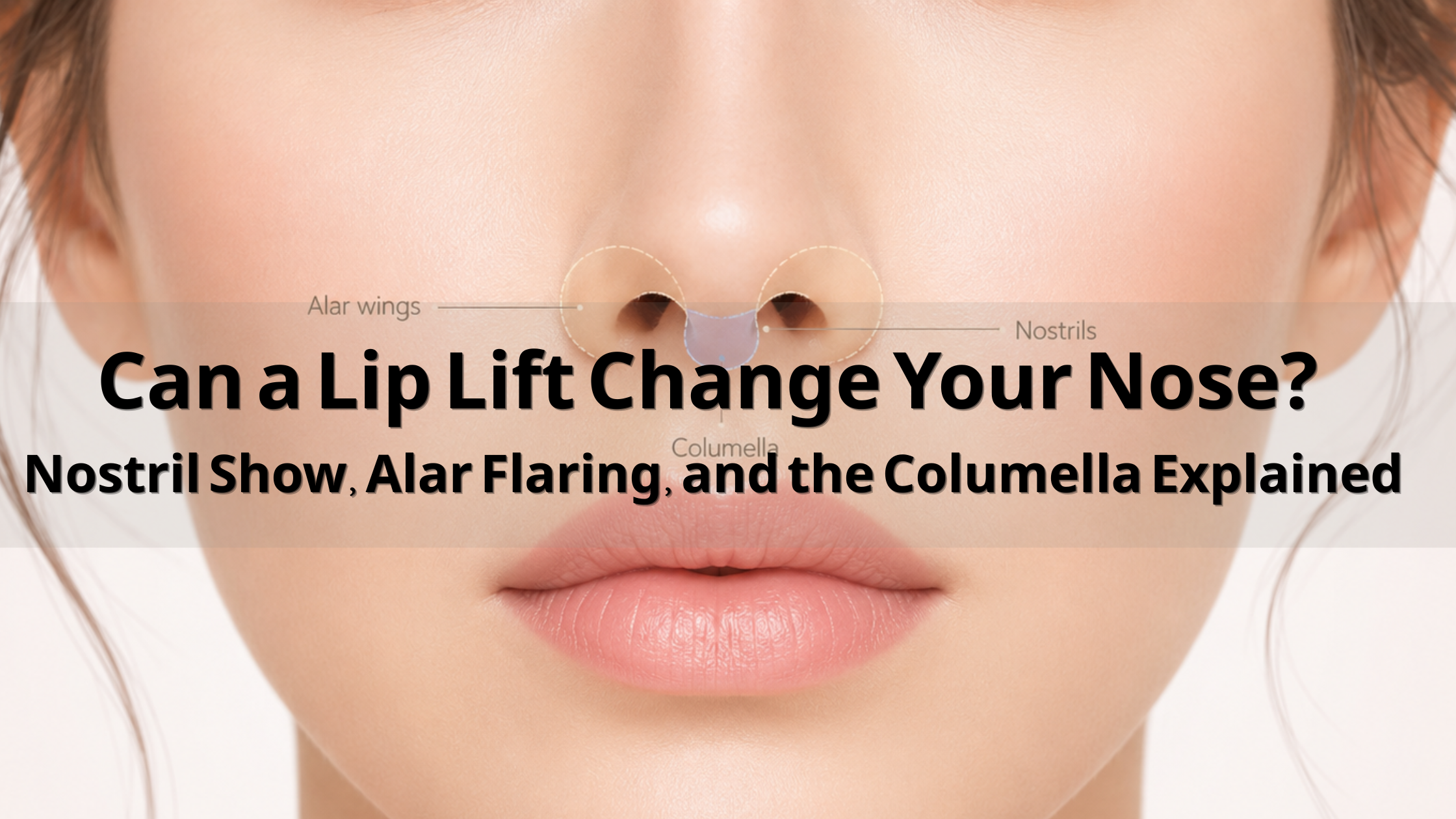
The nose-shape factor. Because the incision follows the curve of the nose's base, the height of the columella and the flare of the alar bases change how deeply the line sits in shadow. A well-projected columella casts a deeper shadow and hides the scar more easily. And here is the crucial point: if over-resection pulls the nostrils or alar bases out of shape, what draws the eye is the changed shape, not the scar itself. A conservative design that preserves the shape of the nose is ultimately the single biggest factor in keeping the scar unnoticed.
What to Do About Redness and Raised Scarring
Ordinary redness, as described above, is a matter of waiting for maturation. What deserves attention is a scar that rises. A scar that turns red, firm, and raised, sometimes with itching or a pulling sensation, may be hypertrophic scarring. Hypertrophic scars are far easier to control when addressed early, with options including taping, topical medication, and injections, so the moment you think "this might be rising," see your surgeon rather than watching and waiting.
Separately, brownish pigmentation can remain after the redness fades, driven mainly by UV exposure and friction. Until the scar matures, consistent sun protection (sunscreen, hats, masks) and friction-free care are the prevention.
What You Can Do to Keep the Scar Inconspicuous
Your side of the work splits into two phases. Before surgery: honestly disclose any scar-prone tendencies and how your past wounds healed, and proceed only once you understand and accept a removal amount designed for harmony rather than maximum effect. After surgery: keep hands off the wound, never rub it, continue ointment or taping exactly as directed, protect the area from the sun, and avoid smoking. These small disciplines add up to the difference you will see in the scar months later.
If, even after full maturation, the scar still bothers you, scar treatments such as lasers and injections exist as options. Have your surgeon follow your progress first, and discuss them if needed.
Frequently Asked Questions
Q1. Can the scar be covered with makeup?
A. Yes, once the sutures are out and the wound has closed, concealer can cover it. During the red phase, a green-toned color corrector can neutralize the redness. Makeup applied before the wound closes risks infection and pigmentation, so wait until then, and remove makeup gently without rubbing.
Q2. Will people notice the scar when I smile or see me up close?
A. A matured scar blends into the shadow at the base of the nose, so at everyday distances it generally goes unnoticed. With the head tilted back, at very close range, or under strong light, it can register as a fine white line or a texture difference. The realistic goal is not "undetectable under any conditions" but "hard to notice in daily life."
Q3. Can I have a lip lift if I am prone to keloids?
A. A history of keloids or hypertrophic scars means a higher-than-usual risk of a visible scar, so the decision requires extra caution. Whether surgery is advisable depends on the severity and location of your history; share photos of how your past wounds healed, have the risks and countermeasures (including preventive aftercare) explained thoroughly, and decide from there. Concealing your history and proceeding anyway is the highest-risk choice of all.
Conclusion: The Scar Comes Down to Placement, Design, and Care
The lip lift scar is designed into the shadow at the base of the nose and matures from red to white over a period of months. Whether it shows is decided by five factors: incision design, suturing, tension, skin type, and aftercare. Add the question of how it blends with your pores and nose shape, and the single biggest key to an unnoticed scar is a conservative design that preserves the nose, followed by consistent care until maturation. No operation leaves zero scar, which is precisely why the right move is to raise every concern concretely at your consultation and proceed only once you are satisfied with the answers.
If you have concerns about scarring, feel free to reach out through Respect Plastic Surgery's official WhatsApp for an online consultation.

 Google Maps