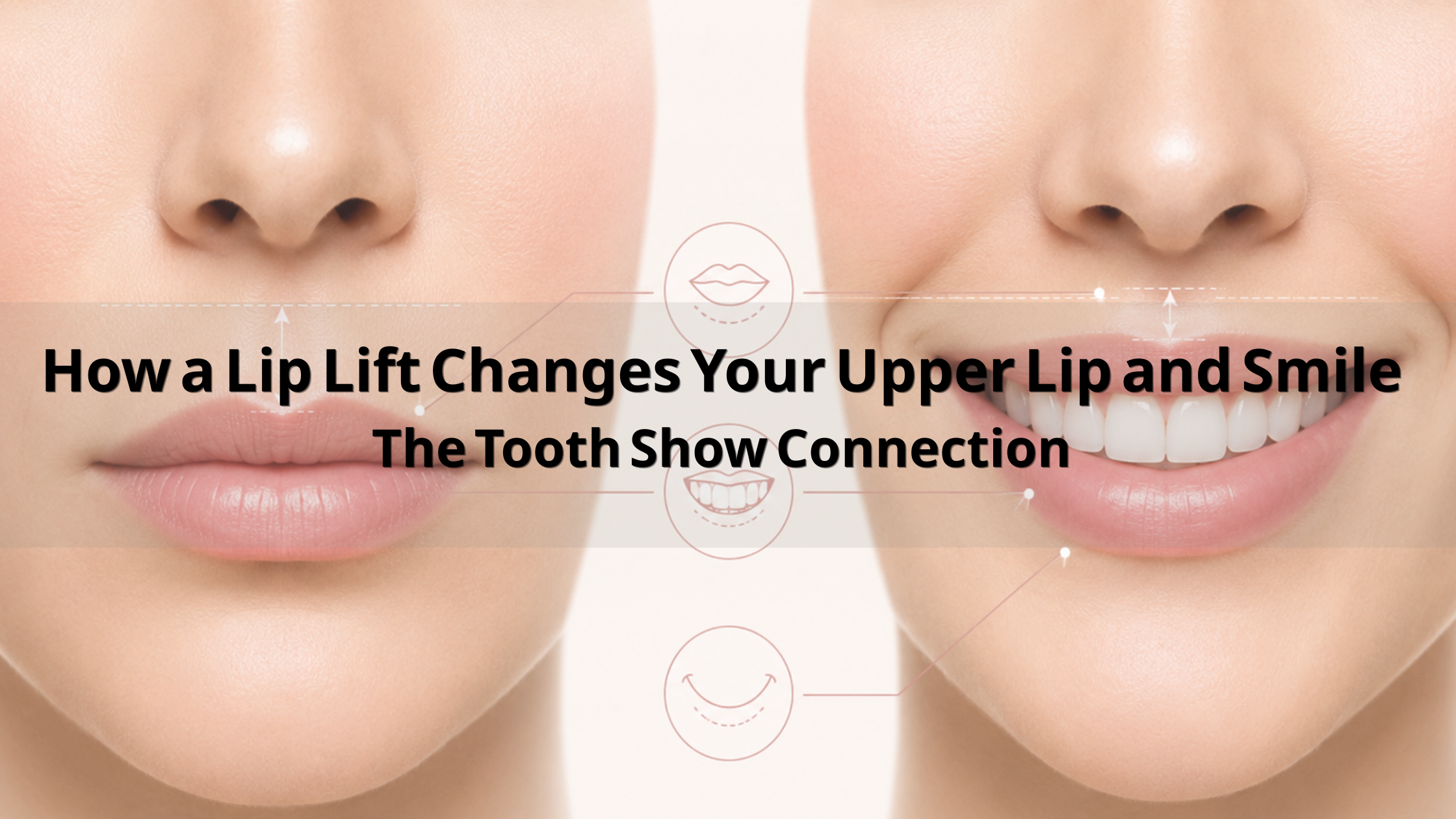
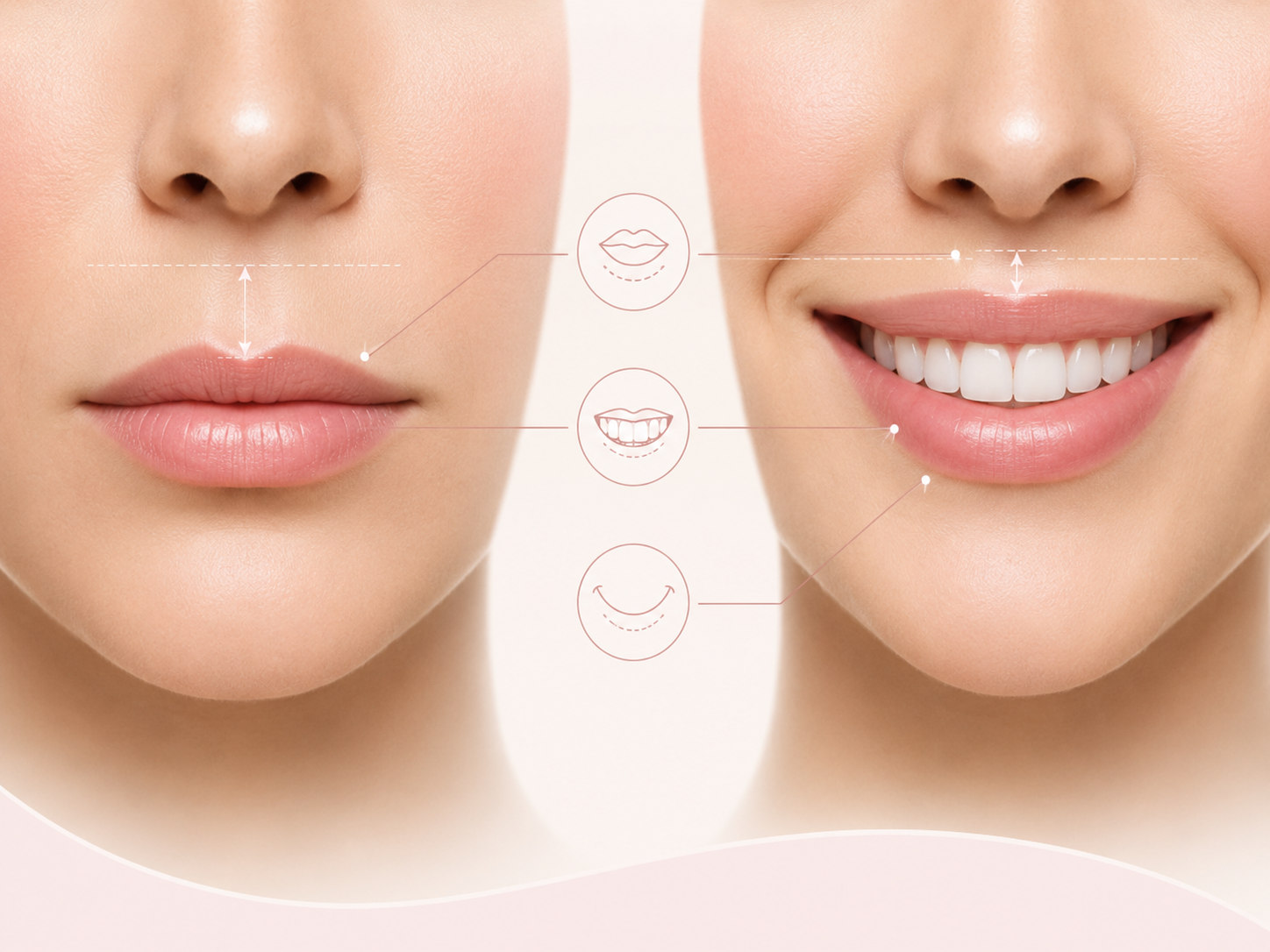
A lip lift is known as the operation that "shortens the space under the nose," but length is not the only thing that changes. Because the procedure pulls the skin upward and sutures it, the entire mouth shifts in concert: the fullness and eversion of the upper lip, how much tooth shows at rest, and even the impression your smile makes. For most people these changes are a plus, but depending on the starting conditions of your mouth, they can also move in an unwanted direction. This article organizes the mouth-area changes a lip lift produces from four angles: the upper lip, tooth show, the smile, and the relationship with a gummy smile.
The Short Answer: Mouth Changes at a Glance
The key point: all of these changes flow from one and the same movement, the upward advancement of the skin. The sections below start from the mechanism.
Why the Mouth Changes: Understanding the Linked Movement
In a lip lift, skin is removed under the nose and the upper-lip-side skin is advanced upward and sutured. What happens then is more than a shortened distance. The advanced upper lip rolls slightly outward (eversion), increasing the visible area of the red lip. At the same time, because the border of the upper lip rises, the upper front teeth peek through more readily at rest.
In other words, the change in lip fullness and the change in tooth show are two faces of the same upward movement. That is why neither can be adjusted in isolation, and why the design must treat the lip, the teeth, and the philtrum length as one set.
Change 1: What Happens to the Upper Lip
When the lift everts the upper lip slightly, the lip gains fullness and dimension. For someone with a naturally thin upper lip, or a lip that has rolled inward with age, this is a welcome bonus: the philtrum shortens and the lip looks younger at the same time. Depending on the incision design, refinement of the Cupid's bow (the central peaks of the upper lip) can sometimes be built in as well.
By contrast, for someone whose upper lip is already full or strongly everted, additional eversion can over-emphasize the mouth and risk a "flipped-up lip" look. This type calls for adjustments: a more conservative removal, or a design that limits eversion. Which type your lips are is one of the essential things to confirm at a consultation.
Change 2: What Happens to Tooth Show at Rest
A mouth in which the upper front teeth peek through slightly at rest, with the lips relaxed and parted, is considered an element of a youthful look. When someone whose teeth are hidden at rest has a lip lift, that appropriate degree of tooth show appears, and the mouth reads brighter and tighter. Among the effects of a lip lift, this ranks alongside the change in length itself.
The reverse is equally true: for someone whose front teeth already show at rest, surgery pushes tooth exposure into excess and risks an unnatural, "mouth never quite closed" impression. Because tooth show is a change that only moves in one direction, upward, the pre-op assessment of your resting tooth show translates directly into the suitability judgment.
Change 3: What Happens to Your Smile
The impression of your smile changes too. With the border of the upper lip sitting higher, the upper teeth show more readily when you smile, and the view from the corners of the mouth to the teeth brightens. For anyone whose teeth barely show when smiling, and who is often read as somber because of it, a more defined smile is a welcome change.
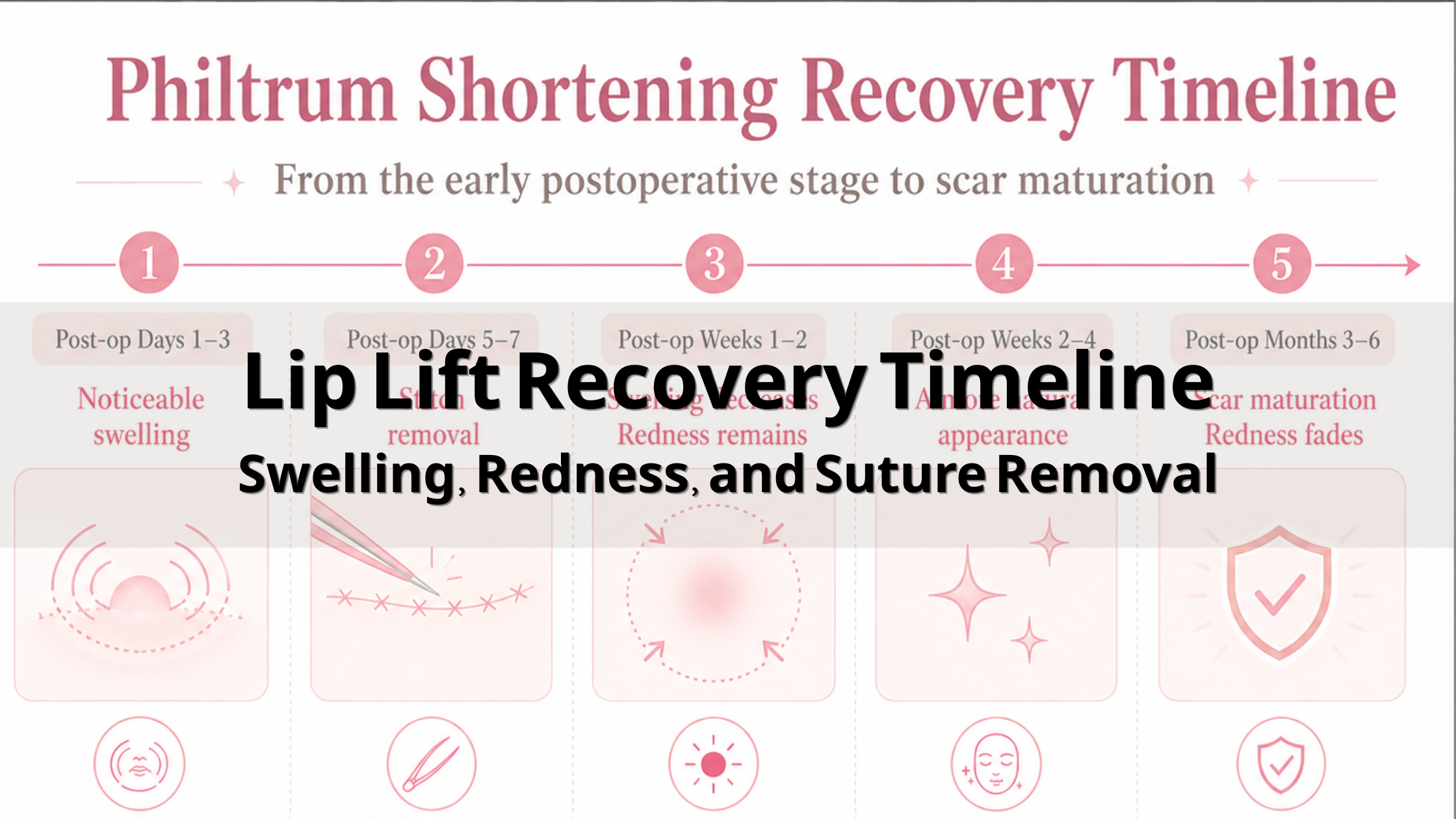
There is one thing to know about the early post-op smile, however. While swelling and tightness persist, the upper lip does not move freely, and your smile can look stiff or asymmetric. This is a temporary effect of swelling around the suture line, and as the swelling resolves and the tissue settles, a natural smile typically returns. Do not judge the result by your smile in the first days; evaluate expression, too, only after the swelling has settled.
The Gummy Smile Relationship: Not a Treatment, but a Worsening Risk
This is the most misunderstood point, so let us be unambiguous: a lip lift is not a treatment for a gummy smile, the condition in which the gums show when you smile. On the contrary, because the operation raises the border of the upper lip, it works in the direction of exposing more gum when you smile, and can make a gummy smile worse.
If you are aware that your gums show easily when you smile, then even if the length of your philtrum bothers you, the first step is a diagnosis of exactly how much gum shows in your smile. The main causes of a gummy smile lie in the hyperactivity of the lip-elevating muscles or on the gum and skeletal side, and the corresponding treatments, such as botulinum injections or dental and oral-surgical approaches, are separate options from a lip lift. If both the philtrum length and a gummy smile concern you, have a physician design comprehensively which to address, in what order, and by what method.
Work Backward from the Mouth You Want: "Shorter" Alone Cannot Decide It
As we have seen, a lip lift changes length, lip fullness, tooth show, and the smile as one linked system. The right way to design it is therefore not from "how many millimeters" but backward from "what mouth and what smile do I want."
At your consultation, have the surgeon evaluate not only your resting face but photos and movement of your smile as well: tooth and gum show at rest and when smiling, lip fullness and eversion, and philtrum length. Together these determine whether your design should make the most of the lip changes or suppress them to a minimum. Two people who both "want a shorter philtrum" can have entirely different optimal designs, depending on the conditions of their mouths.
Frequently Asked Questions
Q1. My smile feels stiff and asymmetric after surgery. Will it recover?
A. Early stiffness and asymmetry are almost always temporary effects of swelling and tightness around the suture line. As the swelling resolves and the tissue settles, expression typically returns to normal. If awkward movement or clear asymmetry persists after several months, have the state assessed at an examination.
Q2. I am worried my lips will become too full. Can that be controlled?
A. The degree of upper lip eversion can be controlled to an extent through the removal amount and the design. If your lips are naturally full or strongly everted, say so, and discuss a design that restrains eversion. Be aware, though, that "shorten the philtrum a lot but leave the lip completely unchanged" runs up against the linked structure; the two cannot be fully separated, so align your priorities with your surgeon.
Q3. I have a gummy smile but the length of my philtrum also bothers me. What should I do?
A. Start with an examination that evaluates both your gum exposure when smiling and the state of your philtrum. Depending on the degree of the gummy smile, doing the lip lift first can worsen the gum exposure, so a design that addresses the gummy smile first, or in combination, may be considered. The order and combination depend on your condition, so share both concerns from the outset and have the plan built around them.
Conclusion: The Mouth Changes as One System, So Show Them Your Smile
In a lip lift, the upward advancement of the skin changes the upper lip's fullness, tooth show at rest, and the look of your smile together. For a thin-lipped mouth with hidden teeth, the changes are a major plus; for full or strongly everted lips, or teeth and gums that already show, there is a risk of excess, and a gummy smile in particular can worsen. Have yourself diagnosed not only on resting philtrum length but on your smile as well, and choose a design worked backward from the mouth you actually want.
If you would like to know how your own mouth would change, feel free to reach out through Respect Plastic Surgery's official WhatsApp for an online consultation.
 Google Maps