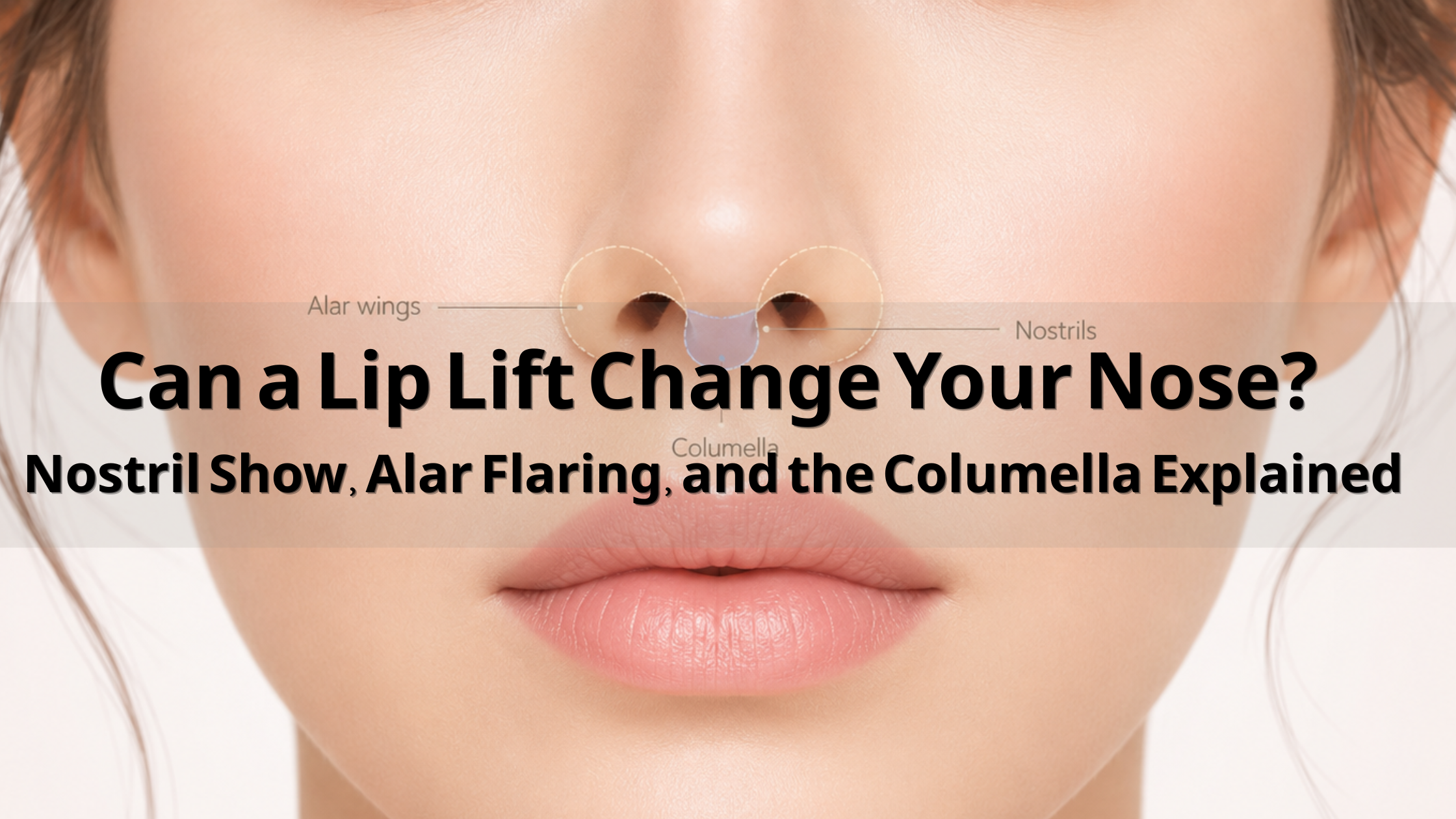
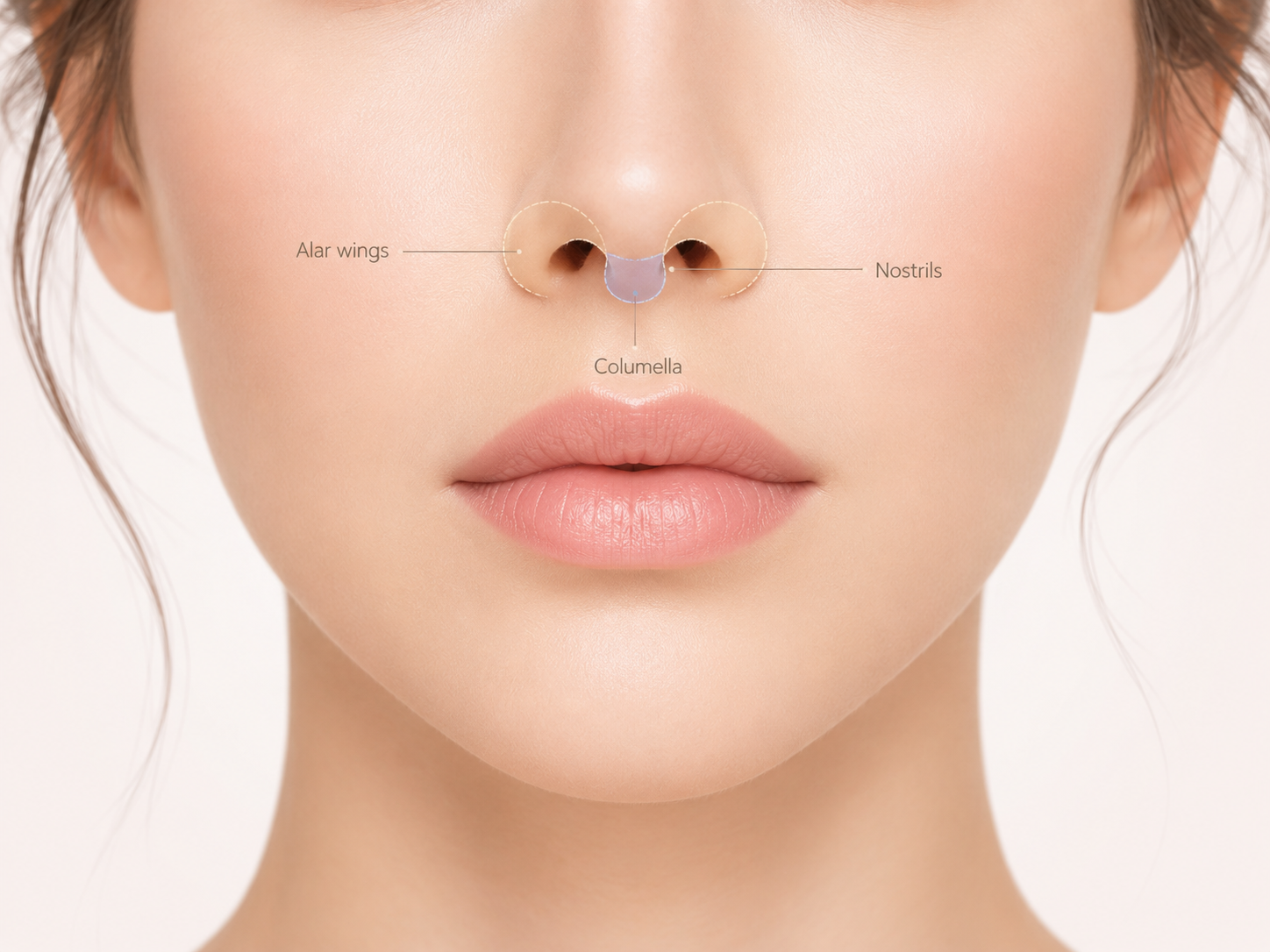
"A lip lift makes your nostrils show." "It widens your alar base." If you are researching this operation, you will run into these claims, and they are not baseless rumors. A lip lift removes skin along the base of the nose and pulls the remaining skin upward for closure. Since the incision and the resulting tension sit directly beneath the nose, changes to how the alar base (the sides of the nostrils), the nostrils themselves, and the columella appear are structurally possible, depending on the design and the amount removed. This article focuses entirely on the lip lift's effects on the nose: the mechanism behind why changes can happen, the design thinking that prevents them, and what to do if you notice a change after surgery.
The Short Answer: Effects on the Nose at a Glance
The essential point: these are not "side effects that always happen" but "changes that can happen depending on removal amount and design." Put the other way, this is territory that a nose-aware design can prevent. The sections below take them in order.
Why the Nose Is Affected: Understanding the Structure
A lip lift removes skin along the base of the nose and advances the lower skin upward for closure. The suture line is then under constant tension as the skin tries to return to its original position, and the recipient of that tension is the lower nose sitting just above the incision: the nostril rims, the alar bases, and the base of the columella.
If the removal stays within the skin's slack and the tension is properly managed, the nose is barely affected. But if too much is removed, or the design concentrates tension in one spot, the changes appear: the nostril rims are pulled downward (which from the front reads as the nostrils opening upward), the alar bases are pulled outward, or the columellar base descends. In other words, the effect on the nose is the direct result of removal amount and tension design.
Change 1: Nostrils That Show More, or Appear Upturned
This is the most widely known change. The force that lifts the philtrum skin upward is simultaneously a force pulling the nostril rims downward. The result can be a larger visible nostril area from the front, creating the impression that "the nostrils show more" or "the nose turned up."
The people who need the most caution are those whose nasal tip is already upturned or whose nostrils are already visible from the front. For this type, even a small change registers in the overall impression, so a more conservative removal amount and adjustments to the incision placement become necessary. Confirming at the pre-op diagnosis which type your nose is to begin with is the first step in preventing this change.
Change 2: An Alar Base That Appears Wider
The worry that "a lip lift widens the nose" is also common. When the incision extends broadly past the outside of the alar bases, or the closure spreads tension sideways, the alar bases can be pulled outward and appear flared.
For anyone already self-conscious about alar width, this is an unwelcome change. Prevention rests on two ideas. First, tailor the width and position of the incision to the shape of each person's alar base. Second, rather than lifting with the skin surface alone, use deep-layer supporting closure to reduce the tension carried by the surface. If alar flaring is a particular concern of yours, ask concretely at your consultation whether the design will affect the alar base.
Change 3: A Different-Looking Columella
Often overlooked, the columella (the pillar between the nostrils) can also be affected. The central portion of the incision meets the base of the columella, and tension here can pull the columellar base downward or shift the impression of the angle formed between the columella and the upper lip.
This relationship does not work only in the negative direction, however. The columellar base and upper lip together shape the profile, and when designed appropriately, the line from under the nose to the mouth can actually end up looking cleaner. What makes this area distinctive is that columellar change is not only something to prevent but something to incorporate into the design.
Preventive Design: Treating the Nose and Philtrum as One Structure
As we have seen, the effect on the nose is the outcome of removal amount, incision design, and closure. The essence of prevention, then, is not deciding the removal amount by looking at the philtrum alone, but designing the balance within the continuous structure running from the nose through the philtrum, nostrils, alar bases, and columella included.
Concretely: evaluate the nose type before surgery (tip direction, nostril visibility, alar width, columellar height), and work backward to a removal amount that will not disturb the nose. Keep the incision faithful to the curve of the nose's base. And minimize the surface tension reaching the nasal rims through deep-layer supporting closure. Because the philtrum and the nose are anatomically one connected unit, a design that analyzes both together is the most reliable way to protect the shape of the nose.
If You Feel Your Nose Has Changed After Surgery
If, early after surgery, your nostrils seem more visible or your alar base looks flared, do not jump to conclusions. For a while after the operation, swelling pushes the entire lower nose outward, and temporary changes in how the nostrils and alar base look are common. Over the weeks to months it takes for swelling to resolve, most of this settles back to normal.
The key to telling the difference is the direction of change over time. If the odd look fades as time passes, a temporary swelling effect is likely; if a clear distortion remains even after the swelling has resolved, a structural change from tension is possible. Even in the latter case, do not self-judge: have your surgeon evaluate the state first, and discuss whether revision is needed only after the tissue has stabilized.
Frequently Asked Questions
Q1. My nostrils seem more visible after surgery. Will they go back once the swelling subsides?
A. If the change appeared early after surgery, there is a good chance it reflects swelling pushing the lower nose outward. Track the course with photos and watch whether the impression settles as the swelling resolves. If a clear change remains after several months, have an examination to assess whether it is structural.
Q2. My nostrils already show a little (my nose is slightly upturned). Can I still have a lip lift?
A. It is not out of the question, but you belong to the type that requires careful design with the risk of increased nostril show factored in. Options include a conservative removal amount and adjusted incision placement, though in some cases an approach other than a lip lift fits better. Confirm the design policy for your specific nose type at a consultation.
Q3. I am also bothered by alar flaring. Can alar base reduction be done at the same time?
A. Combining procedures around the nose is a possible option, but whether to do them simultaneously depends on how the incisions relate, how tension will act, and your priorities. Precisely because these procedures influence each other's results, decide not piece by piece but as one overall nasal design, with a plan drawn up after an examination.
Conclusion: The Effect on the Nose Is Decided by Design
Nostrils that show more, an alar base that flares, a columella that reads differently: these changes are structurally possible after a lip lift, but they are not inevitable. The dividing line is the quality of the design: whether the removal stays within the skin's slack, whether the incision follows the shape of the nose, and whether the tension is carried by the deep layers. Because the nose and the philtrum are one connected structure, choose a design that analyzes the nostrils, alar base, and columella along with the philtrum, and evaluate any post-op change only after the swelling has run its course. Hold on to those two points, and the worry about your nose shifts from "a risk to fear" to "a design item to confirm."
If you would like to know your nose type and the right design policy for it, feel free to reach out through Respect Plastic Surgery's official WhatsApp for an online consultation.

 Google Maps