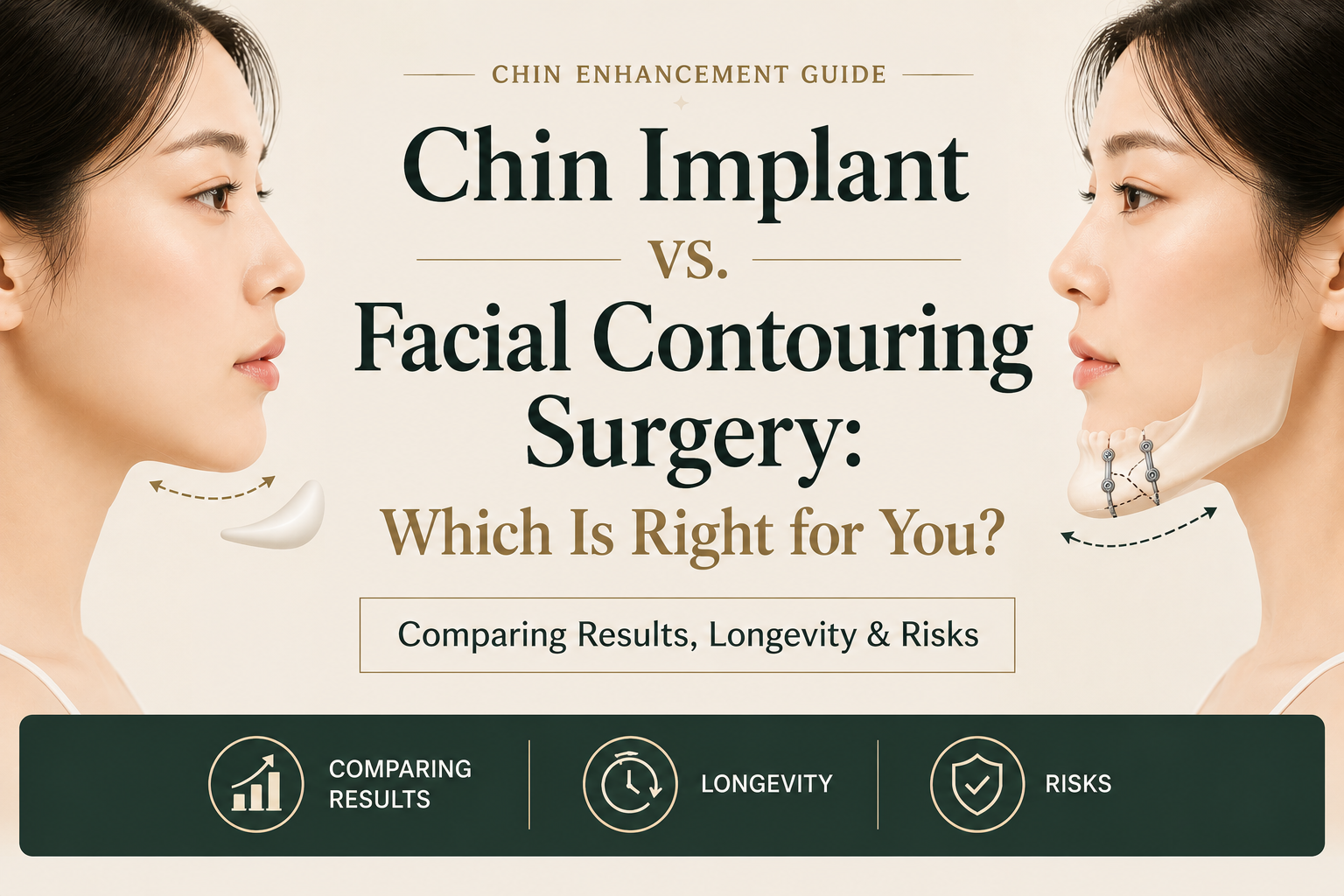
If you're considering chin augmentation or reshaping, one of the first decisions you'll face is whether to consider a chin implant or chin bone surgery (genioplasty).
These aren't simply two versions of the same procedure — they differ significantly in what they can change and the type of risks involved. This article compares chin implants and genioplasty across five factors: results, longevity, downtime, drawbacks, and cost, along with general guidance on which patients tend to consider each option.
How the Two Procedures Differ
Here's a quick overview of how each procedure works:
A chin implant involves inserting material (typically silicone) at the tip of the chin to add projection. It's placed through a small intraoral incision, and the surgery itself is relatively brief.
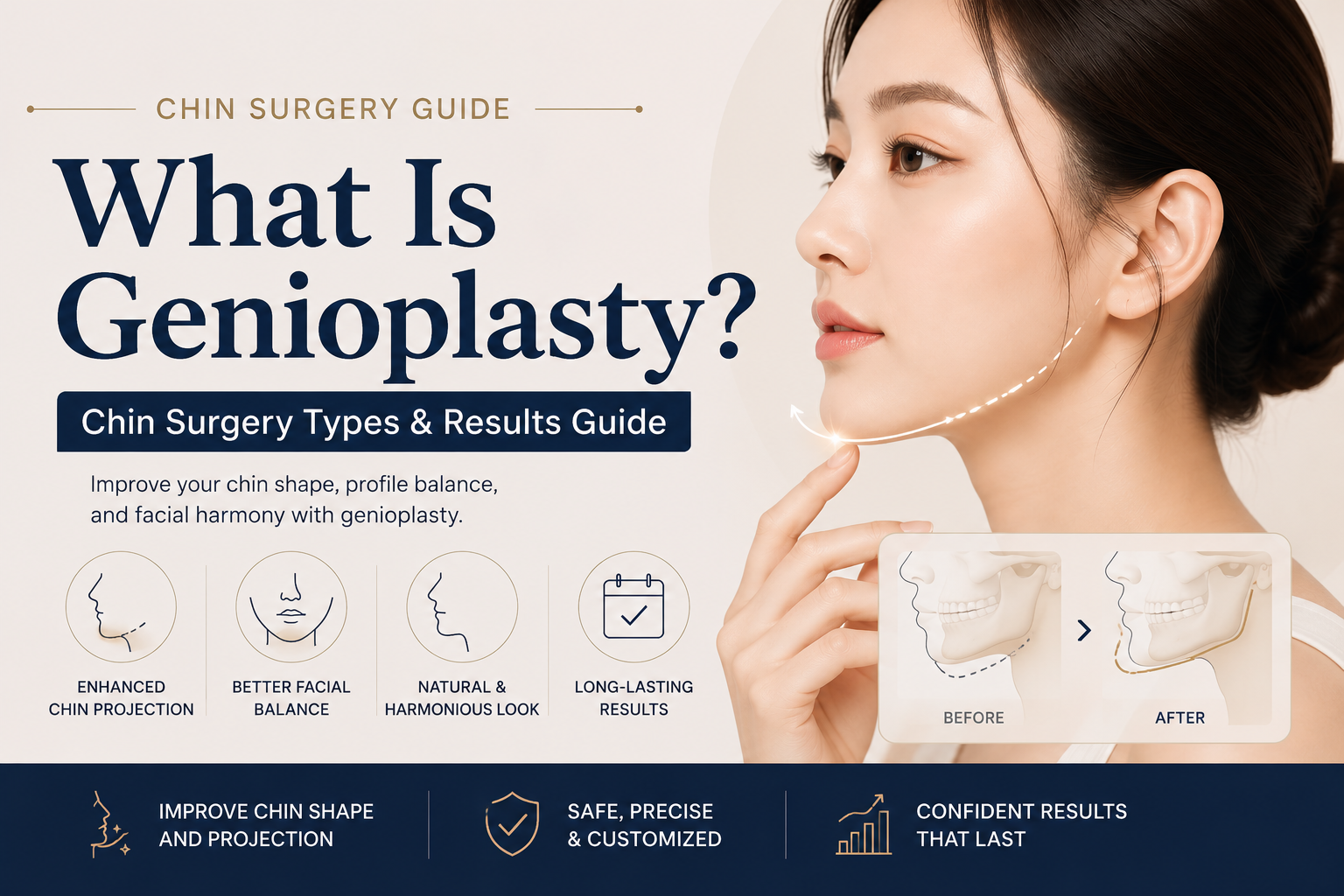
Genioplasty (chin bone surgery) involves cutting and repositioning the chin bone itself. Beyond simply projecting the chin forward, this approach allows for changes in multiple dimensions — including reduction, setback, and narrowing. The different genioplasty techniques are covered in detail in [What Is Genioplasty? Types, Techniques & Results (1-1)].
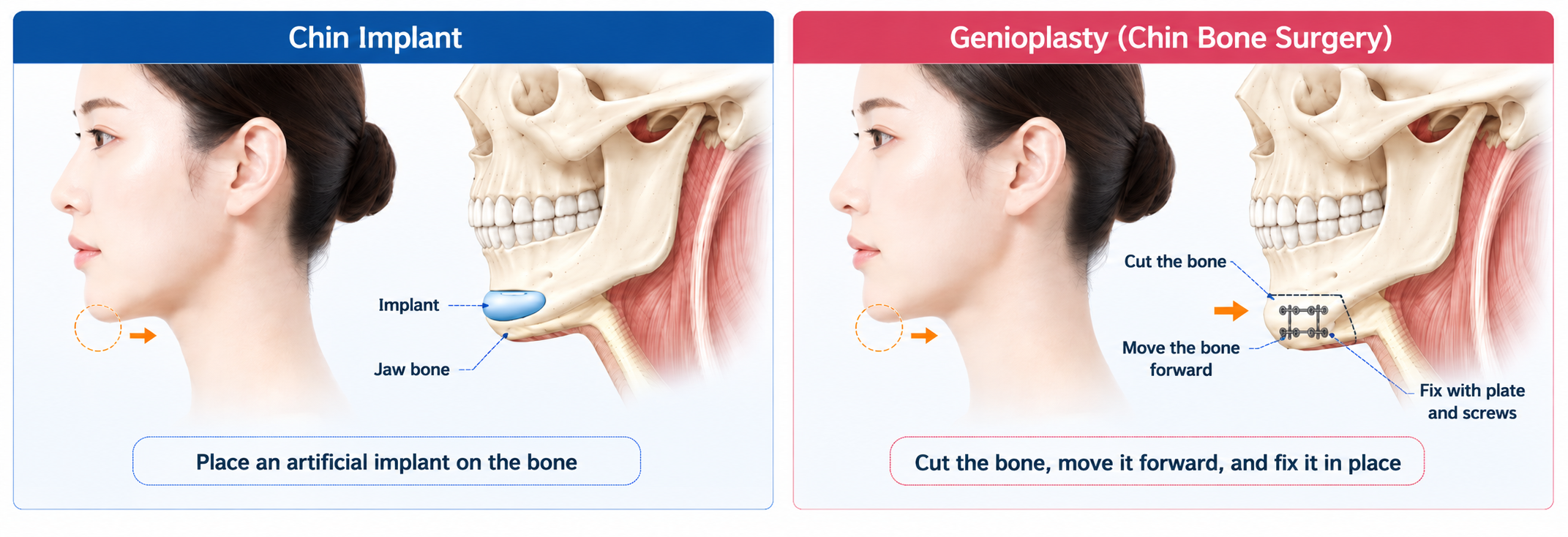
In short: one approach adds material on top of the bone, while the other repositions the bone itself.
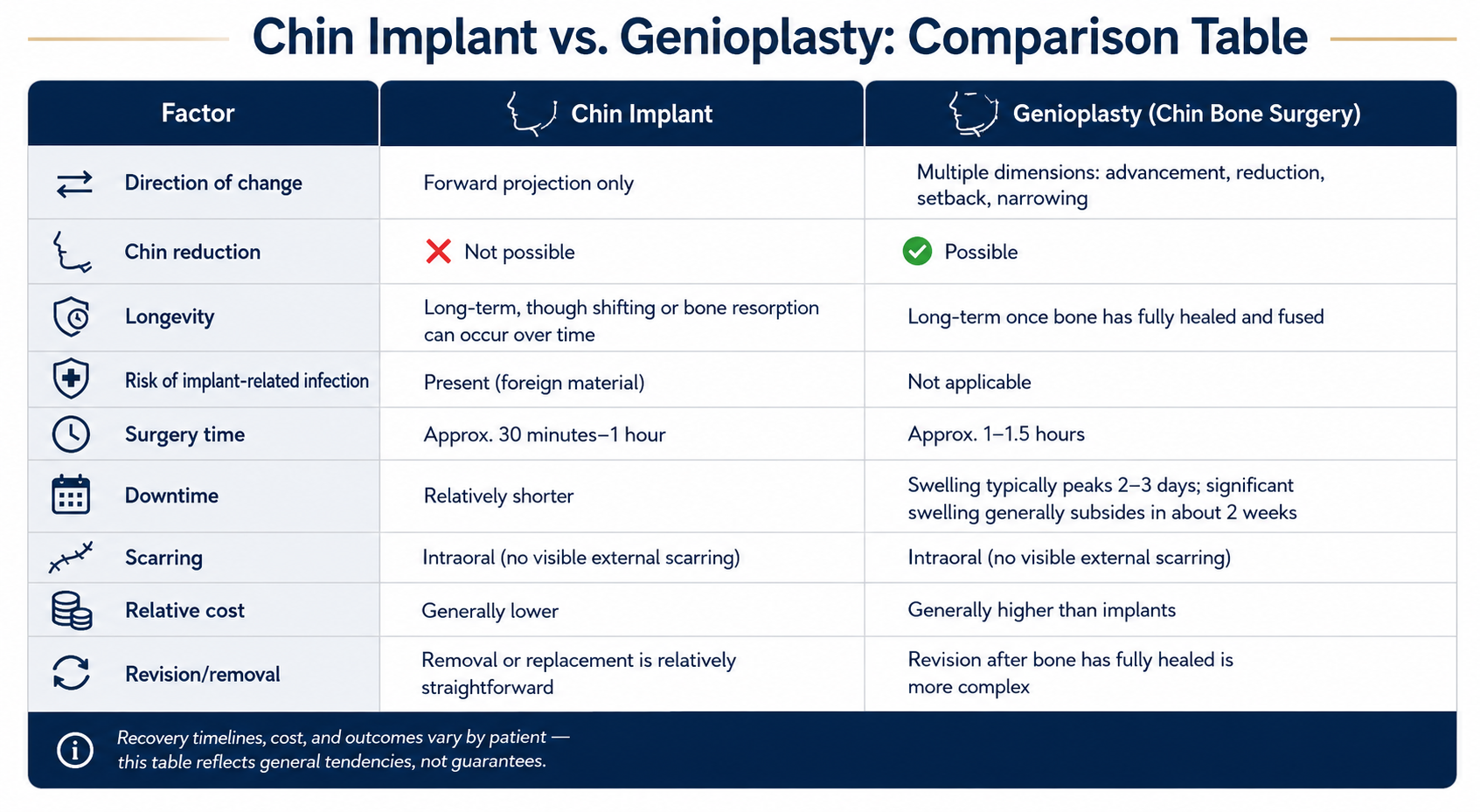
Chin Implants: Pros and Cons
Advantages
- Shorter surgery time and generally shorter downtime
- Typically lower cost than bone surgery
- Reversible — the implant can be removed if it doesn't work out
Drawbacks
There are four key drawbacks worth understanding before choosing a chin implant:
- It's a foreign material: Introducing an implant carries some risk of infection or capsular contracture (tissue hardening around the implant).
- Shifting or visible edges: Over time, an implant may shift, and in patients with thinner skin, the implant's edges can sometimes become visible or palpable.
- Bone resorption: If an implant isn't well-suited to a patient's anatomy, pressure on the underlying bone can gradually cause resorption, which may reduce the aesthetic effect or cause discomfort over time.
- Limited to adding volume: Implants can't address concerns like an overly long or wide chin.
Genioplasty: Pros and Cons
Advantages
- Can address a broader range of concerns — not just projection, but also reduction, setback, and narrowing
- Uses the patient's own bone, eliminating foreign-material risk once healed
- Movement can be planned in precise increments based on overall facial proportions
Drawbacks
- Requires general anesthesia and is a larger-scale procedure than an implant
- Downtime, including swelling, tends to be somewhat longer
- Revision after the bone has fully healed is more complex and depends heavily on the original surgical planning and the surgeon's experience
In short, genioplasty offers more comprehensive, structural changes — but that also means the initial planning and choice of surgeon matter significantly more.
Which Should You Choose? General Guidance by Concern
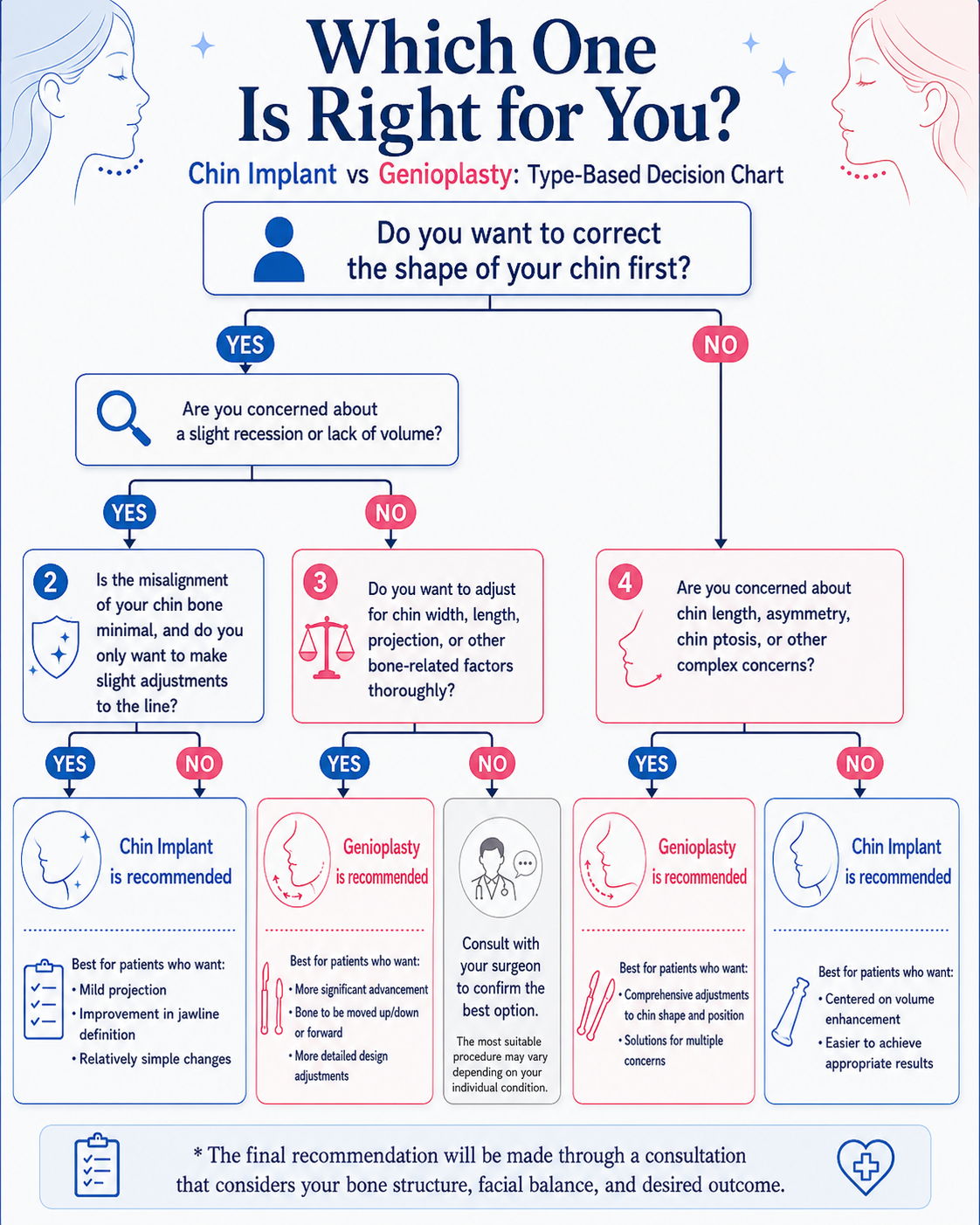
A chin implant may be worth discussing if:
- Your main concern is a receding chin or lack of projection
- You'd prefer to start with a reversible option before considering more extensive surgery
- Minimizing downtime is a priority
Genioplasty may be worth discussing if:
- You have concerns about chin length, width, or asymmetry in addition to projection (which implants can't address)
- You'd prefer to avoid introducing foreign material or want to minimize long-term risk
- You have thinner skin and are concerned about an implant becoming visible over time
- You're pursuing broader facial contouring goals, such as an overall jawline refinement
For patients with significant chin recession, a surgeon may find that repositioning the bone itself — as with [sliding genioplasty (1-3)] — produces a more natural result than adding volume with an implant alone. A thorough consultation and imaging analysis are typically needed to determine which approach fits your anatomy.
Switching From an Implant to Genioplasty
It's not uncommon for patients who previously had a chin implant to become concerned about shifting, discomfort, or an unnatural appearance over time. In these cases, the implant can be removed and genioplasty performed to reshape the chin using the patient's own bone. The complexity of this procedure depends on the condition of the surrounding tissue and any bone resorption that may have occurred, so a detailed 3D CT evaluation is essential beforehand. This is covered in more detail in [Revision Genioplasty (5-4)].
Risks and Safety Considerations
Both procedures carry some risk of swelling and bruising, which varies by patient. Because genioplasty involves working near the chin nerve, precise nerve mapping via 3D CT and an experienced surgical team are important parts of managing that risk.
Respect's Safety System
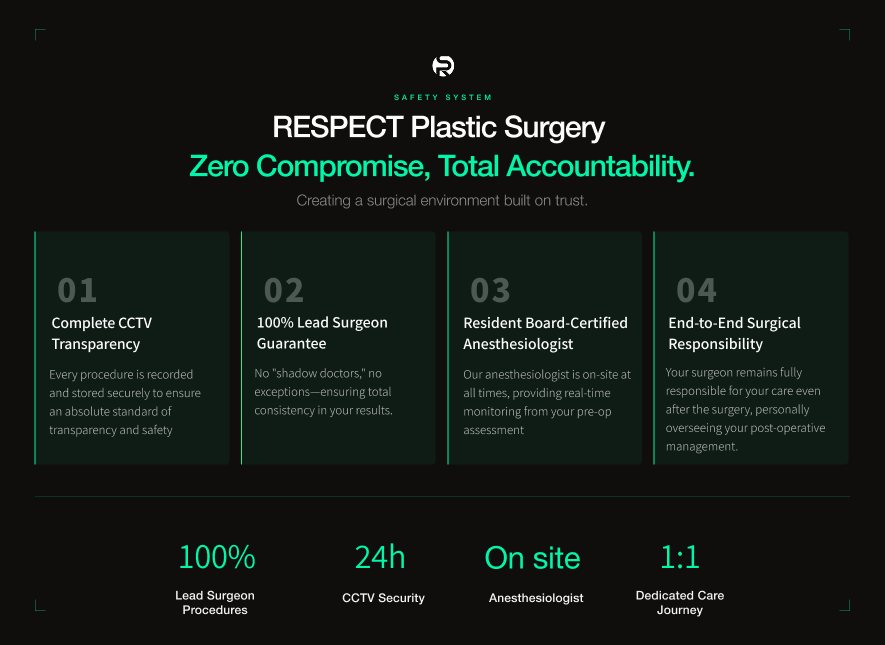
Because these procedures involve general anesthesia, Respect Plastic Surgery maintains safety protocols and monitoring systems designed to prepare for a range of surgical scenarios. (Fill in specifics — anesthesiologist credentials, on-site emergency equipment, accreditations.)
Frequently Asked Questions
Q: Which produces a more noticeable change — an implant or bone surgery?
A: Genioplasty can address a wider range of concerns. Both approaches can add forward projection, but reduction, narrowing, and correcting asymmetry are only possible with bone surgery.
Q: Can genioplasty be performed without removing an existing implant first?
A: In most cases, the implant is removed before genioplasty is performed. Whether removal and bone surgery can be done in the same session depends on the condition of the surrounding tissue and bone.
Q: Is genioplasty more painful than an implant?
A: Both procedures are performed under anesthesia, so there's no pain during surgery itself. Post-surgical swelling and discomfort tend to last somewhat longer with genioplasty, but pain is generally manageable with medication in both cases.
Q: Could dermal filler be an alternative?
A: For mild volume concerns, filler is an option, but results are temporary (typically lasting several months to about a year), and repeat treatments add up in cost over time. For a longer-term change, an implant or genioplasty are the options typically considered.
Summary: Implant for Adding Volume, Genioplasty for Reshaping
A chin implant offers convenience and reversibility, but it's limited to adding forward projection. Genioplasty is a larger procedure, but it can address chin length, width, and positioning more comprehensively, using the patient's own bone.
Which option may be a better fit depends on your specific bone structure and goals. If you'd like a personalized assessment, Respect Plastic Surgery offers consultations that include 3D CT analysis to help evaluate which approach may be appropriate for your case.
As with any surgical procedure, risks such as bleeding, infection, or inflammation are possible and vary by patient. This article is intended for general informational purposes only; any recommendation for a specific procedure is made following an in-person or virtual medical evaluation.

 Google Maps