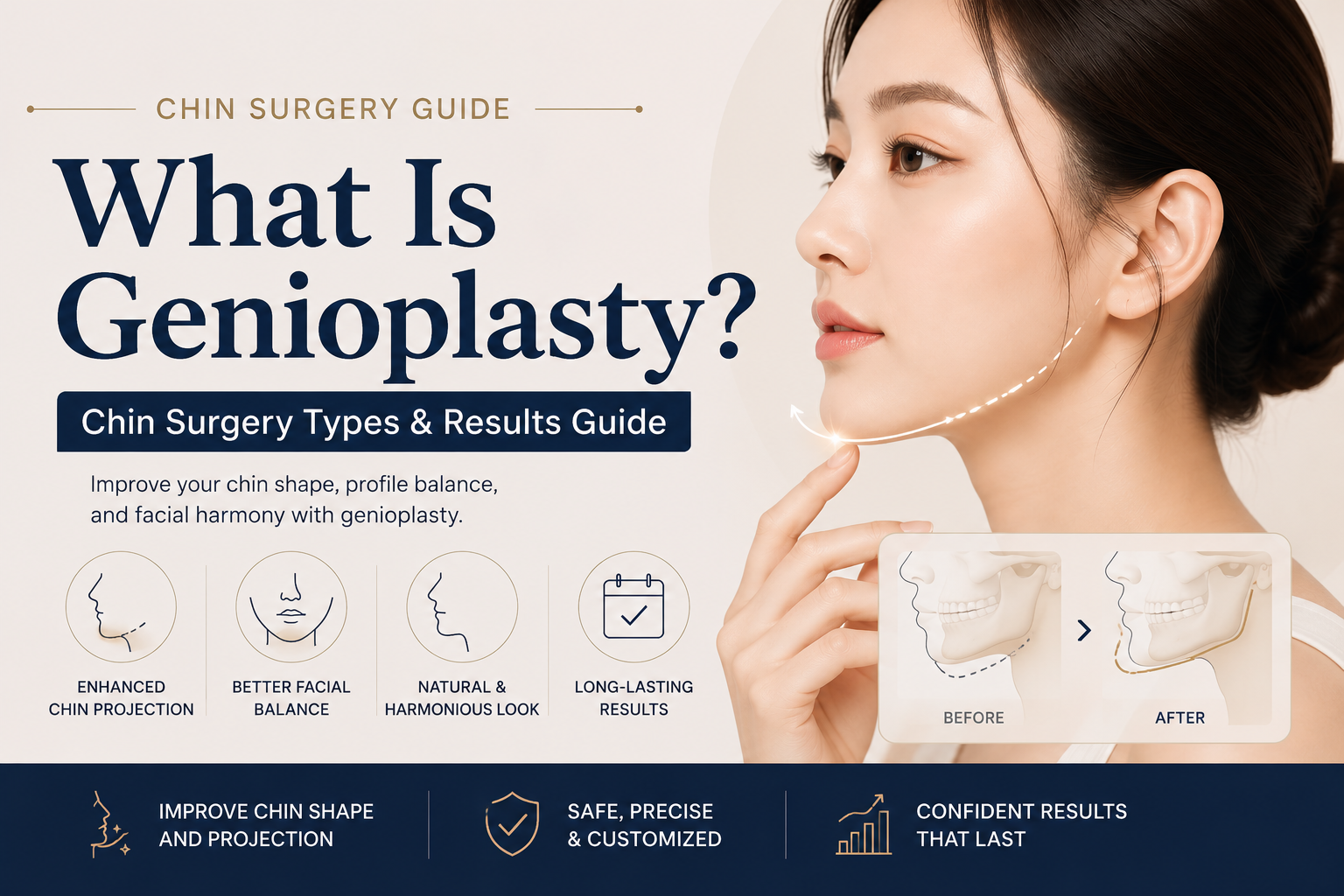
"My face looks long because of my chin."
"My chin is too small and throws off my profile."
"My E-line just doesn't look right."
Many of these concerns trace back to the shape of the chin bone itself.
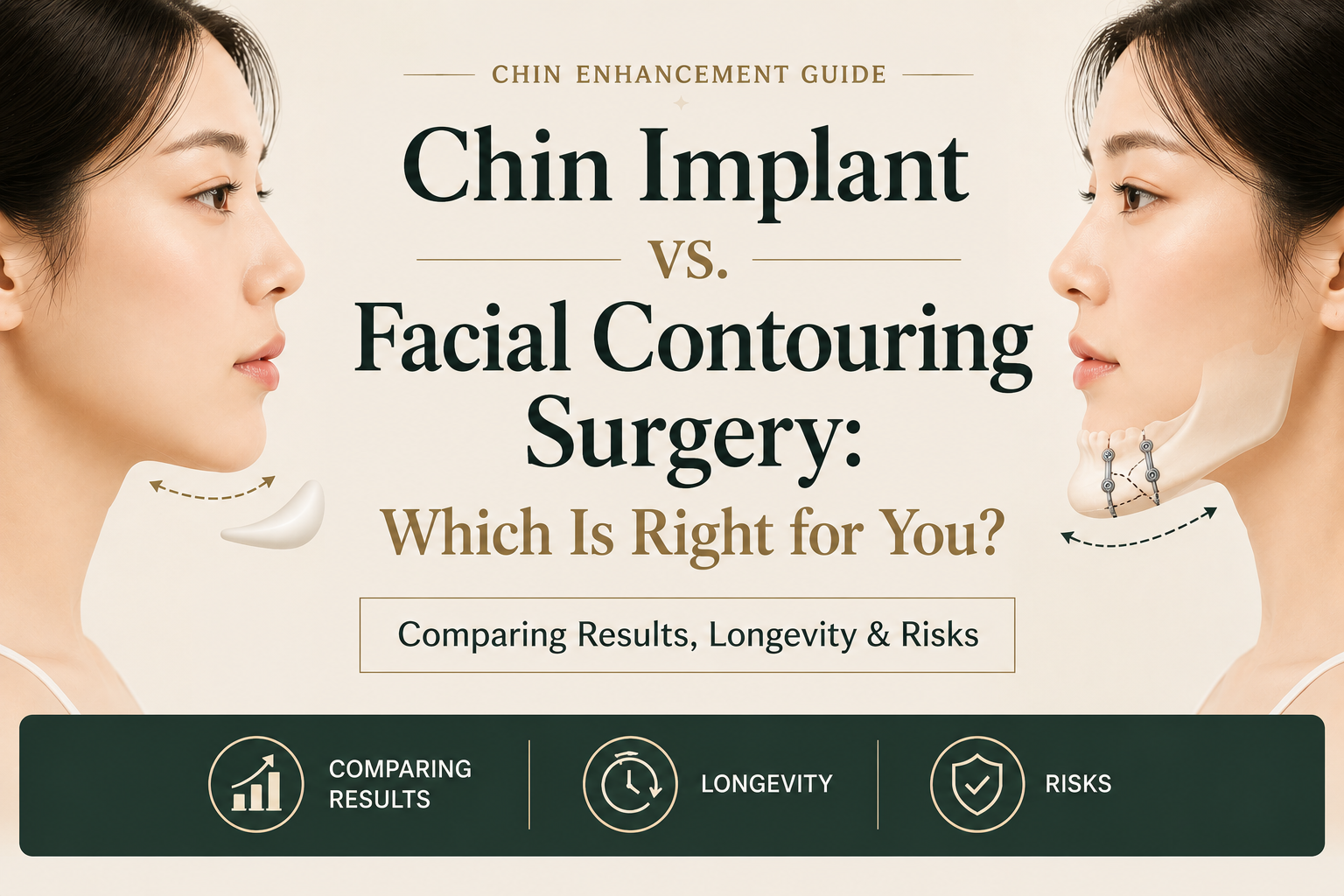
Genioplasty is a facial contouring procedure that cuts and repositions the chin bone to adjust its length, width, and front-to-back projection. In Korea, it's also known as anterior mandible surgery, and it's often a key part of achieving a well-defined jawline.
This article covers the different genioplasty techniques, what each one is typically used for, what the procedure involves, and the risks to consider.
What Is Genioplasty?
Genioplasty involves cutting the tip of the lower jaw bone (the chin, or mentum) and repositioning it before securing it in place. Unlike additive treatments such as dermal fillers or chin implants, genioplasty changes the position and shape of the bone itself, which is why it's often considered for concerns that filler or implants alone can't fully address.
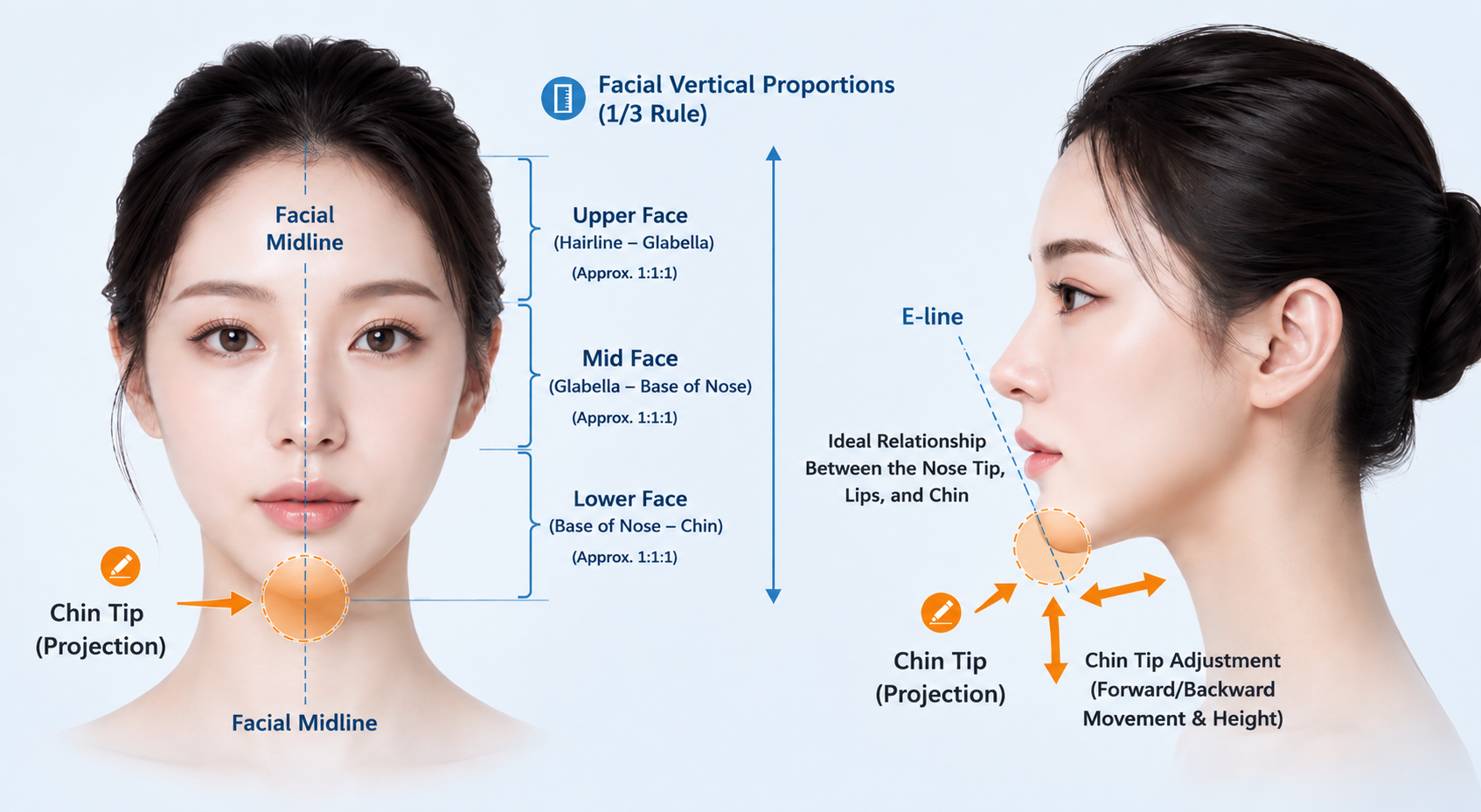
Genioplasty may be considered for concerns such as:
| Concern | Underlying Bone Structure | Approach |
|---|---|---|
| Long chin / elongated face | Vertical overgrowth of the chin bone | Reduction (bone segment removal) |
| Weak or receding chin | Chin bone set too far back | Advancement (sliding genioplasty) |
| Protruding chin | Chin bone projects too far forward | Setback / bone shaving |
| Square or wide chin tip | Excess width of the chin bone | T-cut (narrowing) |
X-rays alone can't determine which category applies to you. A 3D CT scan — which maps bone thickness, nerve location, and soft tissue volume — is used to evaluate the surgical approach that may be appropriate for your anatomy.
Types of Genioplasty: 4 Techniques and How They're Chosen
Genioplasty isn't a single procedure — it's a category of techniques a surgeon may select from based on individual anatomy and goals. Here are four commonly used approaches:
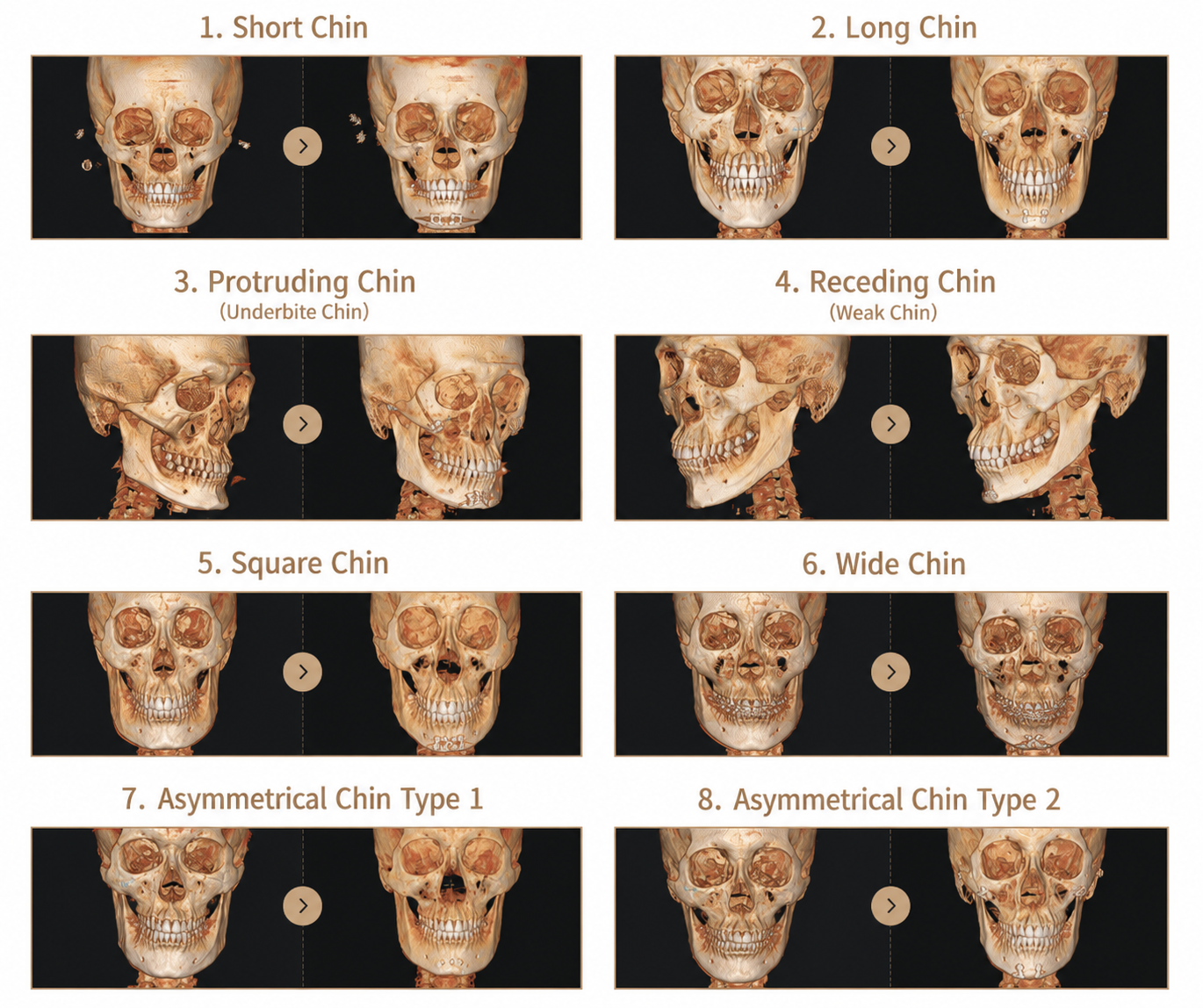
① Chin Reduction (Bone Segment Removal) — For a Long or Elongated Chin
This technique involves making two horizontal cuts in the chin bone, removing the middle segment, and rejoining the upper and lower portions. This is intended to shorten the vertical length of the chin. → See [Chin Reduction for an Elongated Face (1-4)] for details.
② Sliding Genioplasty (Advancement) — For a Weak or Receding Chin
The chin bone is cut and moved forward before being secured in its new position. This approach uses the patient's own bone rather than an implant. → See [Correcting a Weak Chin with Sliding Genioplasty (1-3)] for details.
③ Chin Setback / Reduction — For a Protruding Chin
A chin that projects forward is moved backward or reduced by shaving down the protruding portion. If a bite misalignment is also present, this may need to be evaluated alongside orthodontic treatment.
④ T-Cut Osteotomy — For Narrowing a Wide Chin
The chin bone is cut in a T-shaped pattern, the central segment is removed, and the remaining segments are brought together to narrow the chin. This is sometimes combined with jaw angle reduction as part of an overall facial contouring plan. → See [T-Cut Osteotomy for Facial Contouring (1-6)] for details.
💡 Specialist's note: Surgeries often combine multiple techniques — for example, reduction with advancement, or T-cut with reduction. The appropriate approach depends on an individualized evaluation of facial proportions, and outcomes vary by patient.
What Genioplasty May Improve
Genioplasty can affect more than the shape of the chin alone. Depending on the individual case, patients and surgeons may discuss:
- Profile changes: Adjustments to the E-line (the reference line from nose tip to chin tip) that some patients pursue for a different profile appearance.
- Frontal balance: Changes to vertical facial proportions.
- Overall facial contouring goals: Chin shape is one factor some patients consider alongside jaw angle reduction as part of a broader facial contouring plan.
Individual results vary based on anatomy, technique, and healing. This content is for general education and is not a guarantee of outcome.
📷 [Image 3]
Content: Case photos (before/after side-profile comparison), from actual patients who have provided consent for use in marketing materials
Alt text: Before and after genioplasty case photo
File name: genioplasty-case-eline.jpg
Caption requirement: Must include procedure(s) performed, and a clear disclaimer that results vary by patient. Avoid stating a fixed price beneath case photos.
Procedure Process and Recovery Timeline
At Respect Plastic Surgery, genioplasty generally follows this process:
- 3D CT scan and consultation: Bone, nerves, and soft tissue are evaluated to help determine a surgical plan.
- Technique planning: The surgeon discusses which technique(s) may be appropriate based on the consultation.
- Surgery (general anesthesia, approximately 1 hour): Performed through an intraoral incision, so no external scarring is typically visible.
- Recovery: No hospital stay is typically required; sutures are usually removed after about 2 weeks, with many patients resuming daily activities in about 1 week. Recovery time varies by patient.
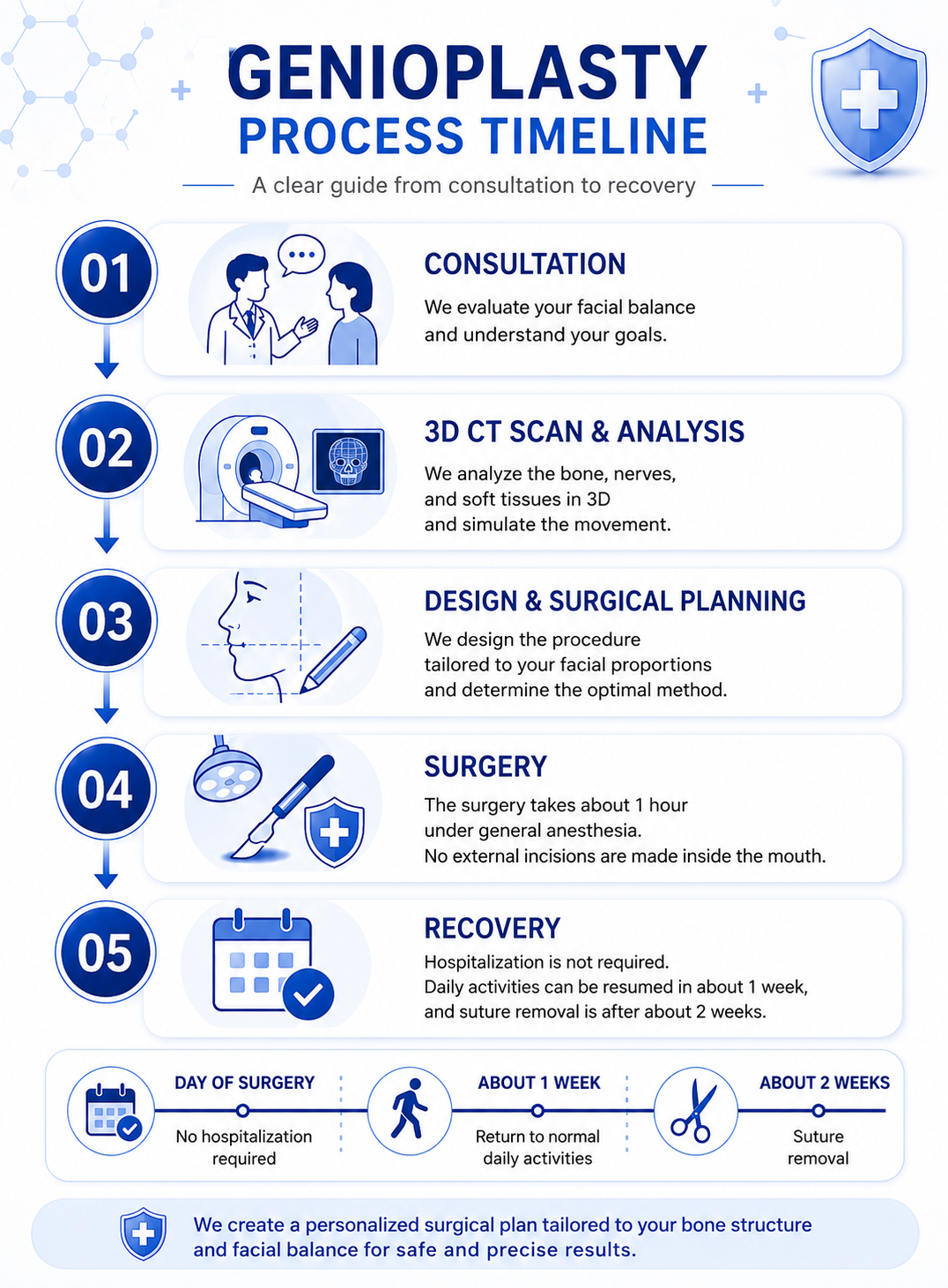
Swelling commonly peaks 2–3 days after surgery and typically decreases significantly within about 2 weeks, though timelines vary.
Risks and Safety Considerations
As with any bone surgery, it's important to understand potential risks, which may include:
- General surgical risks such as swelling, bruising, or infection
- Temporary numbness related to the chin nerve
- Asymmetry or other aesthetic concerns related to surgical planning and healing
A thorough consultation, 3D CT imaging, and an experienced surgical team are part of how these risks are managed and discussed with each patient.
Respect's Safety System
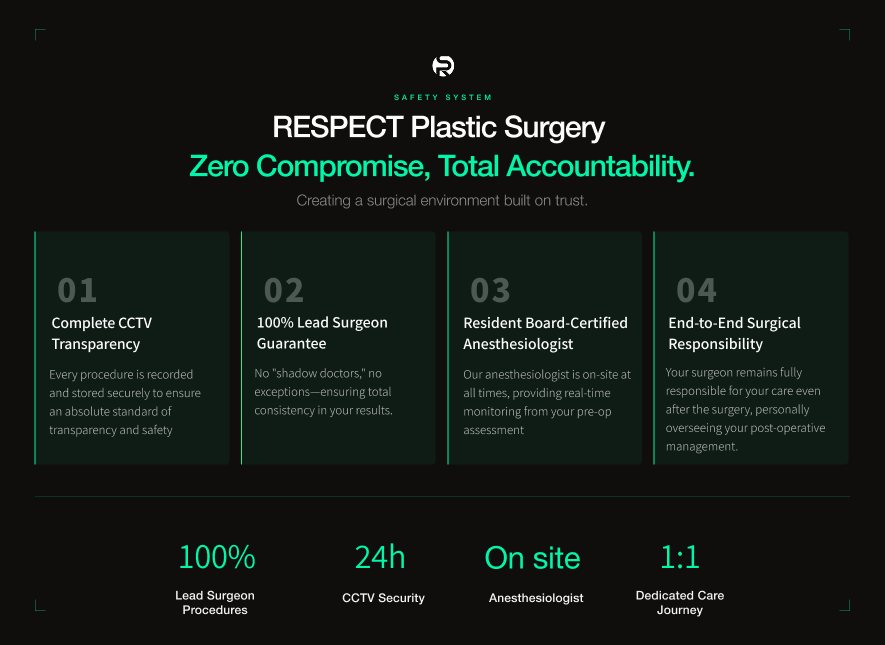
Because genioplasty is performed under general anesthesia, Respect Plastic Surgery maintains safety protocols and monitoring systems designed to prepare for a range of surgical scenarios. (Fill in specifics here — anesthesiologist credentials, on-site emergency equipment, accreditations.)
Planning Your Trip: What US Patients Should Know
Since many readers researching this procedure are considering travel from the US, it's worth adding a short section covering:
- Recommended minimum stay before flying home
- Aftercare/follow-up once the patient returns to the US
- English-speaking coordinator support during consultation and recovery

 Google Maps