
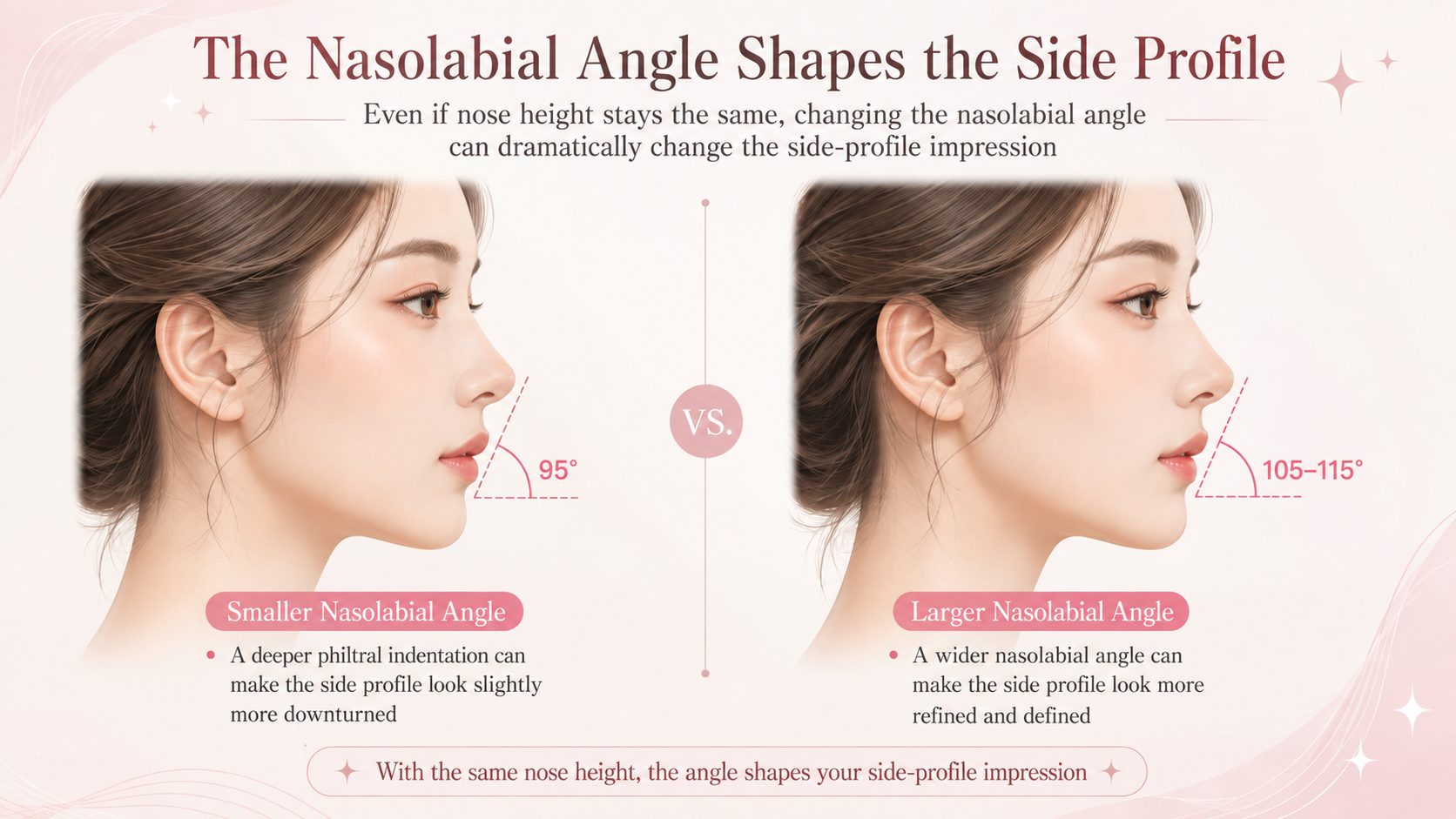
If you have been researching rhinoplasty, you may have come across the term Philtrum-Nose and wondered how it differs from a standard nose job. Both are procedures that deal with the nose, but there is one clear difference between them: the scope of the design. Standard rhinoplasty refines the shape of the nose itself, while Philtrum-Nose also designs the junction connecting the nose and the upper lip, known as the nasolabial angle. This difference is exactly what produces the phenomenon of two faces with the same nasal height showing completely different profiles. Written for readers at the comparison stage, this article explains the differences between Philtrum-Nose and standard rhinoplasty from three angles: design scope, effect on the profile, and the design process.
The Short Answer: Philtrum-Nose vs. Standard Rhinoplasty at a Glance
What Standard Rhinoplasty Covers: The Shape of the Nose Itself
Standard rhinoplasty refines the nose as a single, standalone feature: the bridge (adjusting height and line with an implant or the patient's own tissue), the tip (refining shape and direction through tip plasty), and the alar base (alar reduction). Its main goals are to improve the line of the bridge seen from the front and the height and silhouette of the nose seen from the side, and in most cases the analysis and design stay within the outline of the nose.
For someone whose concern is clearly the shape of the nose itself, this is entirely sufficient. The problem is that some nose concerns do not actually begin and end with the nose.
What Philtrum-Nose Covers: All the Way to the Nose-Lip Junction
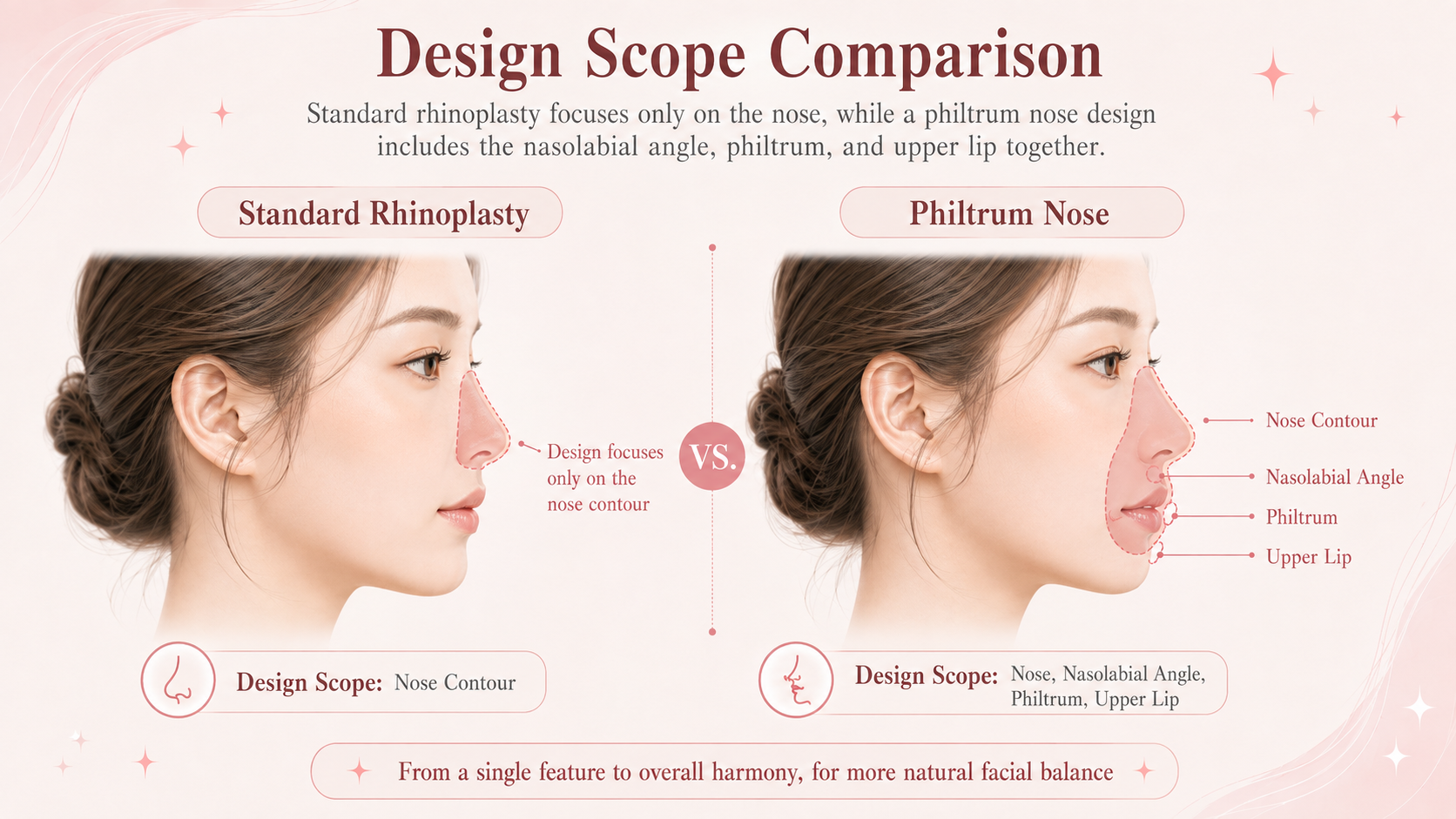
Respect Plastic Surgery's Philtrum-Nose, by contrast, treats the nose not as a standalone feature but as part of the central line running from the nose through the philtrum to the upper lip. The design scope includes the nasal line, meaning the bridge and tip, plus the nasolabial angle: the angle formed between the columella (the central pillar beneath the tip) and the upper lip.
The nasolabial angle is, in effect, the junction between the nose and the mouth. In standard rhinoplasty this junction is rarely a primary design target; Philtrum-Nose makes it an active subject of analysis and correction. How the tip's direction and the columella's angle are designed changes how the philtrum reads and how the area beneath the nose looks.
Why the Same Height Can Produce a Different Profile
This is the heart of the matter: the impression of a profile is not determined by nasal height alone.
When the tip points downward and the nasolabial angle is acute (closed), the tip appears to press down over the upper lip, the area beneath the nose looks stretched, and the philtrum reads as long. In profile, the line from tip to upper lip feels heavy. Conversely, when the tip is moderately upturned and the angle opens gently, space appears between the tip and the upper lip, the area under the nose looks short and clean, and the profile line gains lightness.
In other words, even with exactly the same nasal height, a different nasolabial angle can make the profile look like a different person. When standard rhinoplasty has refined the height and line yet the profile still feels unsatisfying, the cause often lies in this junction. Put the other way around, Philtrum-Nose is an approach that includes the junction in the design precisely so that it can improve not only the front view but the profile (side line) as well.
The Design Process: Shaping a Form vs. Designing from the Cause
The other difference is where the design begins.
Standard rhinoplasty starts from wishes directed at the nose, such as "I want a higher bridge" or "I want a more refined tip," and designs the nose accordingly. Philtrum-Nose does not start from a predetermined procedure; it starts by analyzing why things look the way they do. For concerns such as a long-looking philtrum or an unbalanced area beneath the nose, it first isolates whether the cause lies on the nose side (a drooping tip, an acute nasolabial angle) or on the philtrum side (skin that is genuinely long), and then designs the optimal plan accordingly, whether that is rhinoplasty combined with nasolabial angle correction or another approach such as philtrum shortening.
Because the method follows the cause, two people with the same concern may receive different plans. That is a defining feature of Philtrum-Nose.
Which Should You Choose? Points for Comparison
Standard rhinoplasty may suit you if: your concern is clearly the shape of the nose itself, such as bridge height or deviation, a rounded tip, or wide alar bases, and you have no particular dissatisfaction with your philtrum or the balance beneath your nose.
Philtrum-Nose may suit you if: beyond the nose's shape, you are also bothered by a philtrum that looks long or an under-nose area that looks stretched; you have been told your tip points downward or your nasolabial angle is acute; you want to improve not only your front view but your profile (side line); or you have had rhinoplasty before yet still feel your profile or the area beneath your nose falls short.
These are guidelines only. Which approach truly fits can only be determined through an examination of your nose, philtrum, and overall facial balance. At the consultation stage, we recommend asking the surgeon to explain the difference between refining the nose alone and designing all the way to the nasolabial angle, so you can choose with full understanding.
Frequently Asked Questions
Q1. Is Philtrum-Nose a completely different operation from standard rhinoplasty?
A. It is less a completely different operation than a different design philosophy. The techniques used in Philtrum-Nose to refine the bridge and tip overlap with standard rhinoplasty; the difference is that analysis and correction of the nasolabial angle are added, and the entire central line from nose to mouth is handled as one design.
Q2. I have already had rhinoplasty. Can I still have Philtrum-Nose?
A. It depends on your previous surgery and the current state of your nose. In practice, there are cases where someone felt their profile or under-nose area changed less than expected after rhinoplasty and sought a redesign from the nasolabial angle perspective. The first step is an examination to assess the current state of the nose and the balance of the nasolabial angle, after which a suitable plan can be determined.
Q3. How do the cost and downtime compare with standard rhinoplasty?
A. They vary with the combination and scope of procedures, so there is no single answer. Including nasolabial angle correction broadens the scope of the design and the surgery; please confirm the specific cost and recovery period based on the plan presented at your consultation.
Conclusion: The Difference Is "the Nose Alone" vs. "Including the Junction"
The biggest difference between Philtrum-Nose and standard rhinoplasty is the design scope. Standard rhinoplasty refines the shape of the nose itself; Philtrum-Nose designs the whole central line from nose to mouth, including the nasolabial angle where the nose meets the upper lip. The reason the same nasal height can produce a different profile lies in that angle. If your concern is the nose's shape itself, consider standard rhinoplasty; if you also want your philtrum and profile balance addressed, compare your options with Philtrum-Nose in view.
If you would like to know which approach fits your own concerns, feel free to reach out through Respect Plastic Surgery's official WhatsApp for an online consultation.


 Google Maps