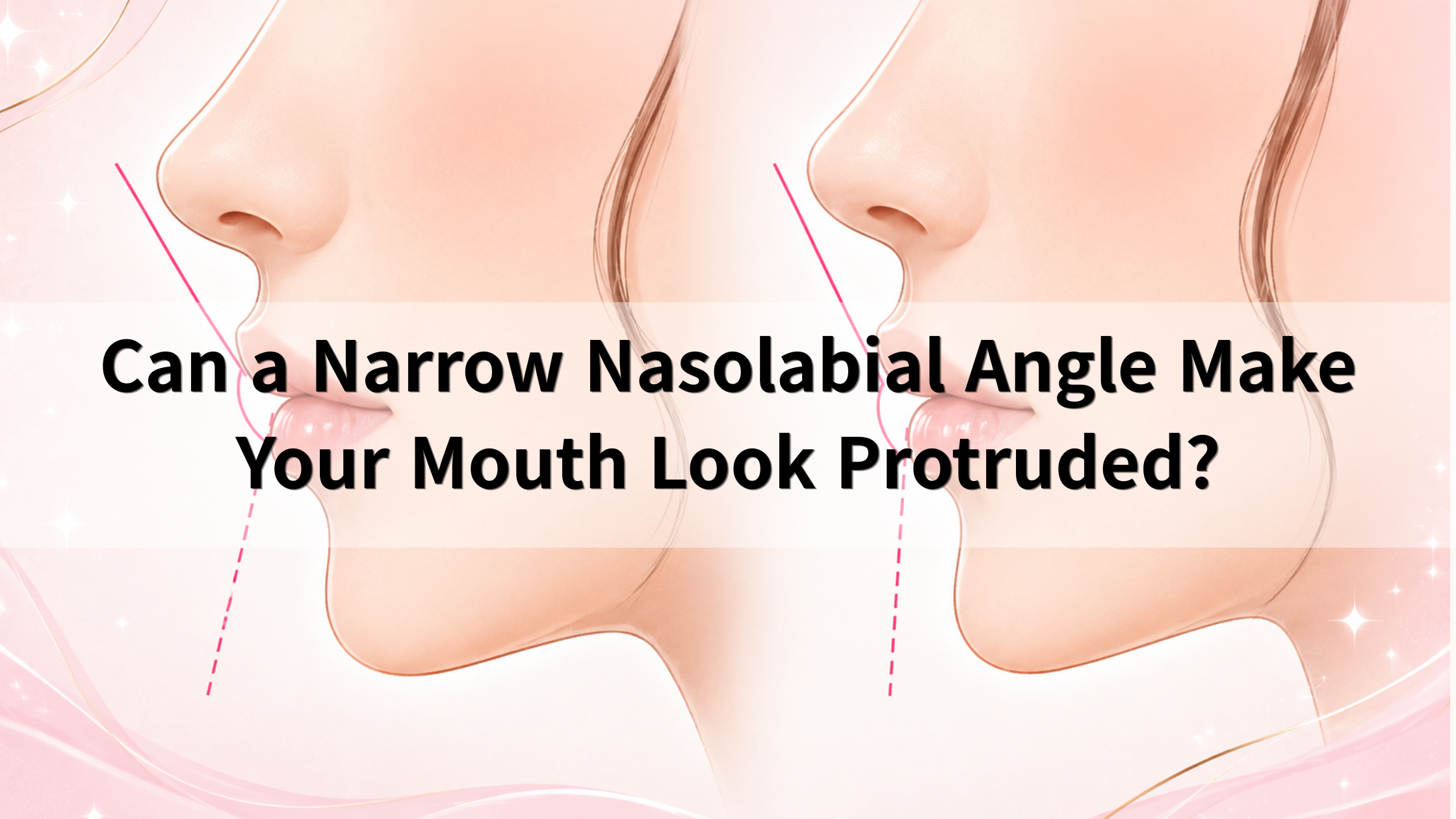
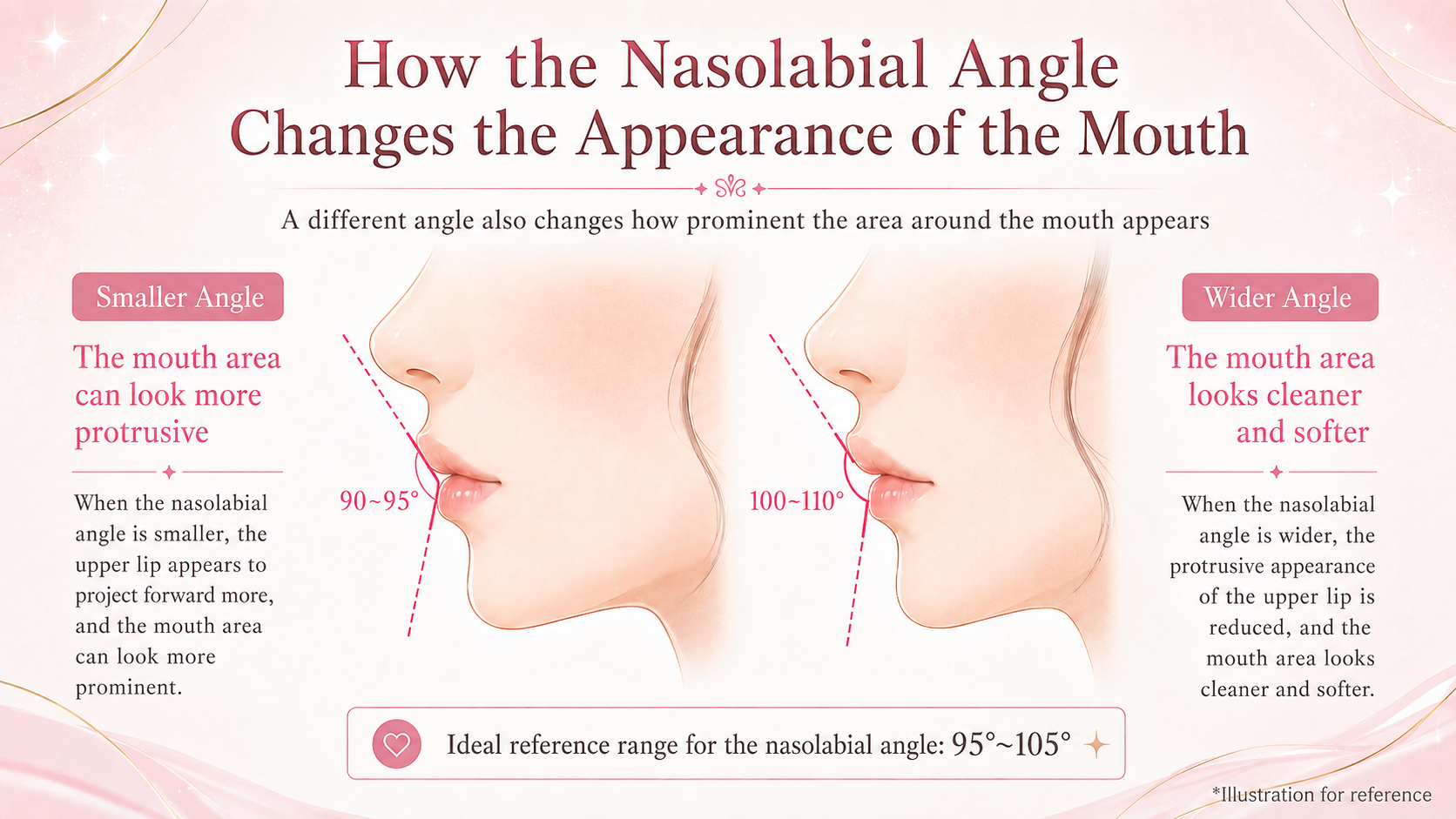
"My mouth area bothers me in profile photos, but my orthodontist says my teeth are fine." If that sounds familiar, the cause of the protruded look may not be your teeth — it may be your nasolabial angle, the angle formed between the columella (the strip of tissue between the nostrils) and the area under the nose. The smaller (more recessed) this angle is, the more the mouth can appear to stick out and the nose can appear droopy.*1 This article sorts out when mouth protrusion is an optical effect of the nasolabial angle versus when it is caused by teeth, alveolar bone, or jaw structure, and explains what the philtrum-nose procedure can and cannot realistically improve. Which type applies to you requires an in-person assessment.
Quick summary: Main causes of a protruded-looking mouth
Each case is explained below.
What Is the Nasolabial Angle — and Why a Small Angle Makes the Mouth Look Forward
The nasolabial angle is the angle formed between the columella and the area under the nose (the philtrum). The smaller this angle, the more the mouth can appear to protrude and the nose can appear to droop.*1 In other words, even with teeth and bone in normal position, a recessed nasolabial angle can make the mouth look "relatively" forward. Respect's official information states that when a recessed nasolabial angle makes the mouth appear protruded, correcting the angle can adjust how protruded it looks.*1
Cases the Philtrum-Nose Procedure May Improve
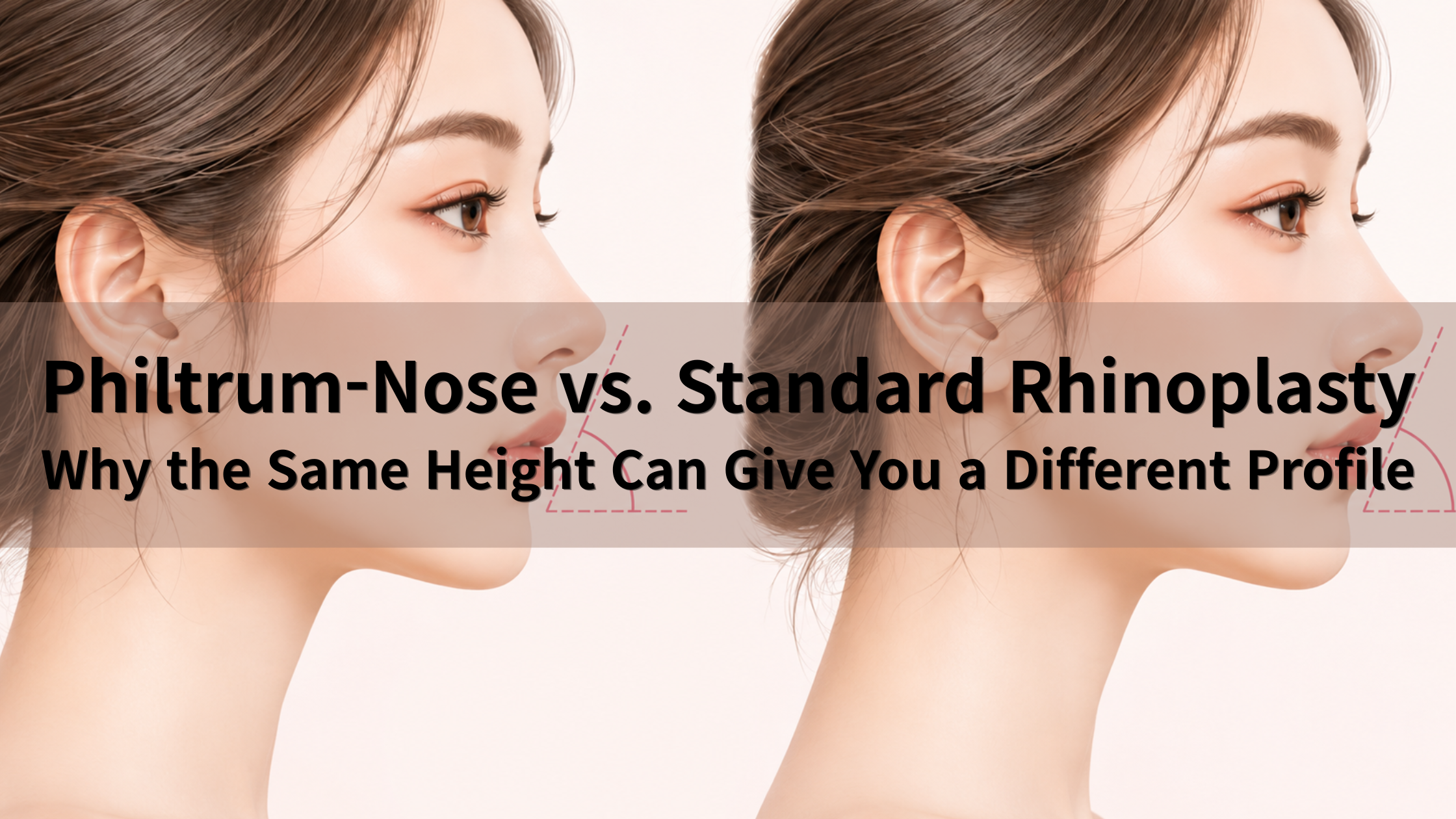
Respect's philtrum-nose procedure performs rhinoplasty and nasolabial angle correction at the same time, reshaping the recessed angle together with the nose line — described as naturally easing the appearance of mouth protrusion.*1 Correcting the nasolabial angle is also described as making the nose look taller at the same physical height.*1 Candidates described in the official information include: a low nasal bridge and tip with a recessed philtrum area, a protruded-looking mouth due to a low nasal tip and underdeveloped chin, a flat-looking midface, and those who want to improve the nose line and nasolabial angle together.*1
As a procedural overview, the official site lists a surgery time of about 1.5-2 hours, no hospitalization, two clinic visits, sleep (sedation) anesthesia, stitch removal around day 7, and a recovery period of about 7-10 days.*1 These are guidelines; actual recovery varies by individual.
Cases the Philtrum-Nose Procedure Is Unlikely to Improve
By contrast, in dental cases where forward-tilted front teeth push the mouth area out, or skeletal cases where the alveolar bone or jaw itself sits forward, reshaping the nose and nasolabial angle does not change the underlying position of teeth or bone. These cases are primarily addressed through orthodontics or surgical correction in the dental/oral-surgery domain. Whether your case is one type or a combination is hard to self-judge from your profile alone — clinical examination and imaging are needed.
The official FAQ also notes that the philtrum-nose procedure is not a nasolabial-angle-only correction: it considers the nose and philtrum together and is tailored to each person's facial proportions.*1 Even when the concern — "my mouth looks protruded" — is the same, the right treatment differs entirely by cause, so identifying the cause is the starting point.
Hints for Telling Which Type You Might Be
As a general guide only: if you have ever been told you have alignment or bite issues, or your front teeth visibly tilt forward, checking the dental/skeletal possibility with a dentist or orthodontist comes first. Conversely, if your teeth are fine but your mouth area still looks forward in profile — and you feel your nasal tip is low or the area under your nose looks recessed — the nasolabial angle may be a factor. This is only an entry-level self-check; causes are often combined, so leave the final judgment to a clinical assessment.
FAQ
Q1. Will the philtrum-nose procedure definitely fix mouth protrusion?
A. When the protruded look is caused by a recessed nasolabial angle, correcting the angle is described as adjusting how protruded the mouth appears.*1 When teeth or bone structure are the cause, the treatment domain differs, and improvement cannot be assumed. Diagnosis of the cause comes first.
Q2. Should I look into orthodontics or the philtrum-nose procedure first?
A. It depends on the cause. If you have been told you have alignment or bite issues, a dental check comes first. If your teeth are fine and a recessed nasolabial angle is suspected, a consultation on the rhinoplasty side is the natural next step.
Q3. How long is the downtime for the philtrum-nose procedure?
A. The official site lists a recovery period of about 7-10 days, stitch removal around day 7, and no hospitalization.*1 Recovery varies by individual, so confirm details during a consultation.
Q4. Can I get only the nasolabial angle corrected on its own?
A. The official FAQ describes the philtrum-nose procedure as one that considers the nose and philtrum together.*1 The approach is tailored to each person's facial proportions, so raise your preference during a consultation.
Summary | Identifying the Cause Is the Starting Point
A protruded-looking mouth can stem from an apparent protrusion caused by a recessed nasolabial angle, or from actual dental/skeletal protrusion — and the treatment domains differ. Where the nasolabial angle is the cause, the philtrum-nose procedure, which corrects the nose and angle together, is described as easing the protruded appearance.*1 Dental and skeletal cases belong primarily to the dental/oral-surgery domain. Because self-diagnosis is difficult, start by having the cause of your profile concern identified through an in-person assessment.
If you are wondering whether your mouth protrusion is driven by your nasolabial angle, please use Respect Plastic Surgery's official LINE for an online consultation.

 Google Maps