Suggested filename: forehead-reduction-downtime-hero.jpg
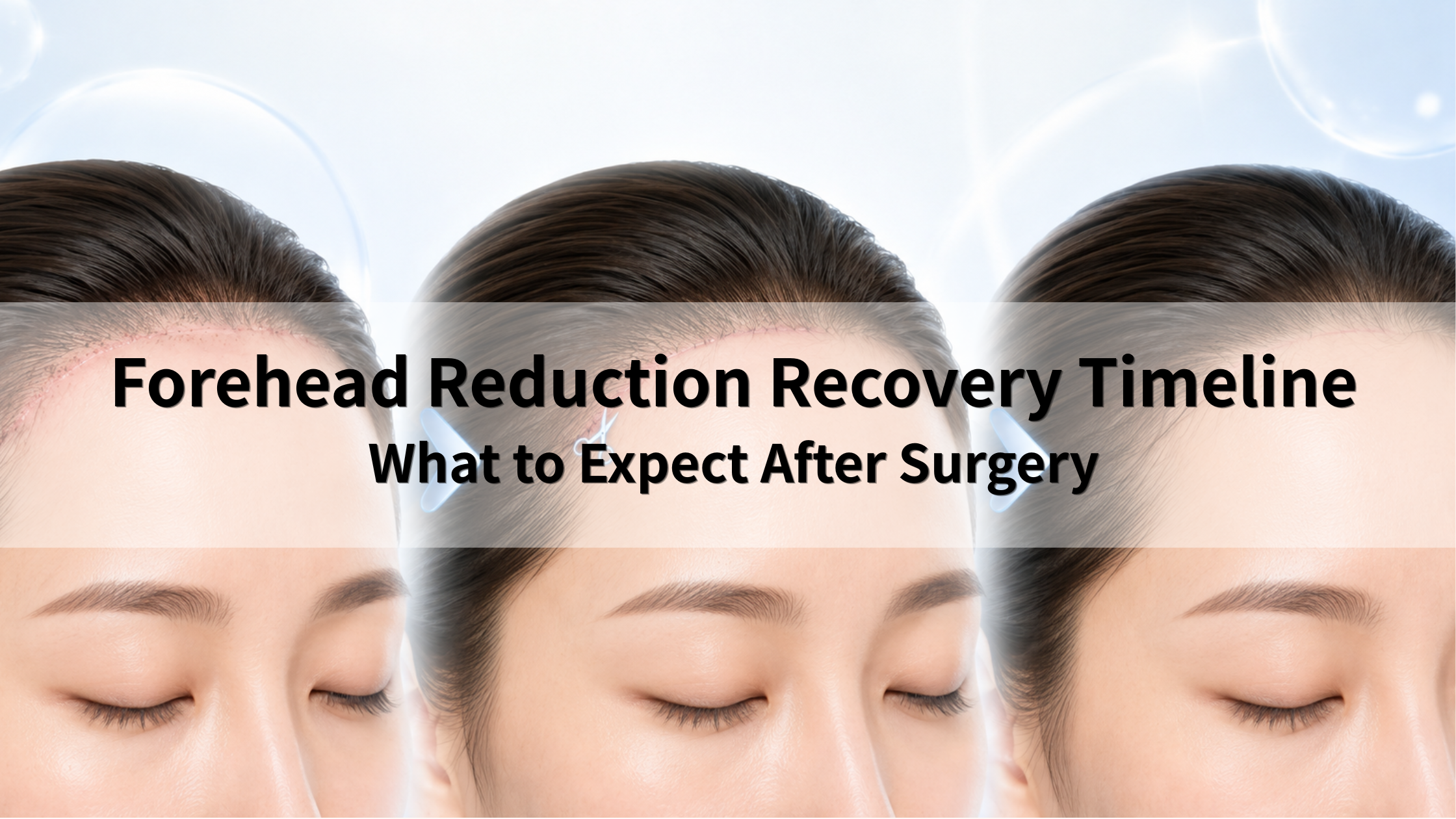
When considering forehead reduction (hairline lowering surgery), recovery matters almost as much as the result. The forehead spans the whole upper half of the face, so knowing in advance how long the swelling lasts and when the tightness lets go helps you both plan work and social commitments and avoid unnecessary worry afterward. This article walks through forehead reduction recovery as a stage-by-stage calendar, from right after surgery until the scar settles. The pace of each stage varies by individual, and your surgeon's assessment always takes priority.
The Short Answer: The Recovery Calendar at a Glance
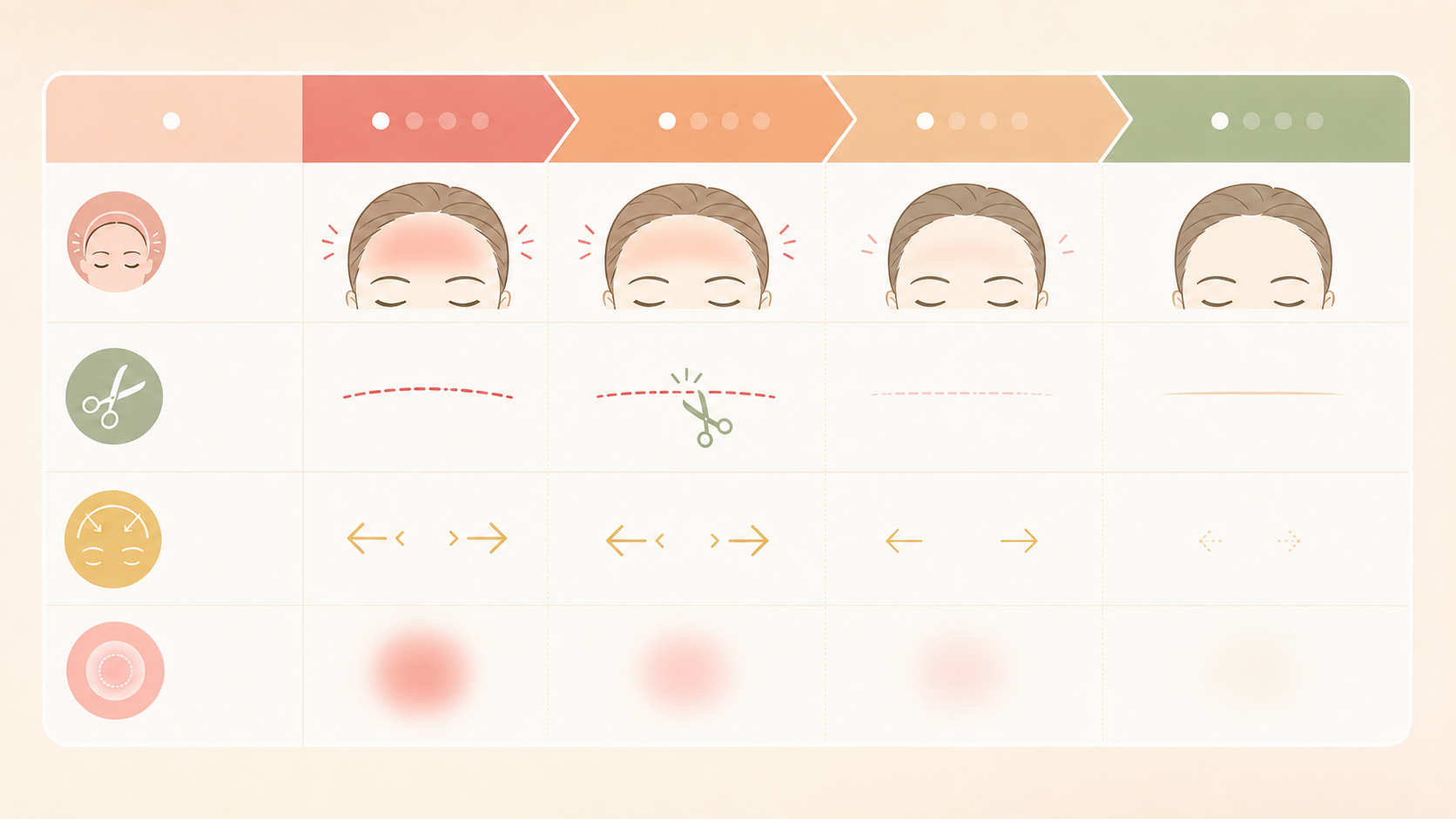
The whole process is easiest to grasp in two phases: swelling resolves on a scale of weeks, while tightness, sensation, and the scar settle on a scale of months. The sections below cover each stage.
Right After Surgery to the First Days: Peak Swelling
Swelling is at its strongest during this period. Expect swelling and tightness across the forehead, and sometimes a heavy-headed feeling. One thing worth knowing about forehead reduction is that swelling travels. Forehead swelling follows gravity downward, so within the first days the eyelids and the area around the eyes may swell, and bruise coloring may appear near the eyes. Many people are startled that their eyes swell after a forehead operation, but this is simply the swelling descending, not a problem with the eyes themselves, and it is a common part of the course.
Swelling at this stage is a normal reaction that happens to everyone, and this is the peak. Keeping your head above heart level helps reduce it. It is the period when the mirror causes the most anxiety, but the picture changes measurably day by day.
Past the Peak, Up to Suture Removal
Once past the peak, the tightness across the forehead eases day by day. The swelling and bruise coloring that descended to the eye area typically shift toward yellowish tones and fade.
The timing of suture removal depends on your surgery and recovery; your surgeon will tell you when. Once the sutures are out, the foreign-body feeling disappears and the area around the hairline looks noticeably cleaner. But suture removal is not completion: the scar is still red at this point and the tightness remains. What begins here is the month-scale period of everything settling in.
A Few Weeks In: Major Swelling Settles
A few weeks past the peak, the major swelling has largely settled and your front-facing appearance approaches everyday normal. With bangs, the incision covers naturally, so this is the point at which people you meet for the first time are unlikely to notice anything, and many patients treat it as the benchmark for scheduling social plans.
Fine puffiness and tightness do remain, though, so the curve of the forehead and the hairline may still read subtly different from the final result. The motto for this stage: do not judge the outcome by how it looks now. Evaluate only after both the swelling and the tightness have settled.
How Long Do Tightness and Dulled Sensation Last? The Forehead-Specific Part
What makes forehead reduction recovery distinctive is what remains after the swelling goes: tightness and changes in sensation. Because the operation advances the scalp forward and fixes it in place, a pulled, taut feeling across the scalp lingers for a while. And because the skin's fine nerves around the incision are affected, parts of the forehead or crown can feel dulled, tingly, or oddly itchy.
In most cases these are the kind of symptoms that ease slowly, on a scale of months. The itching or prickling that appears during sensory recovery is often a sign of nerves coming back online, and no cause for alarm. If, however, the sensory changes are intensifying or spreading, that falls outside the normal course; have it checked at an examination.
The Scar's Redness: The "Red Phase" Is Built Into the Plan
Per the official site, the suture line at the hairline carries redness for about one month, then becomes less and less noticeable over 3 to 6 months. This redness is a normal part of healing; red does not mean failed. And in forehead reduction, as the redness fades, hair from the follicle-preserving incision grows through and blends the scar into the hairline, so the scar's appearance improves through two overlapping processes on a month scale.
The right time to evaluate the final result is several months out, once the swelling, the tightness, and the scar's redness have all settled. Before that, "it shows more than I expected" is still an interim report.
Why Recovery Speed Varies
Even with the same operation, the pace of recovery differs from person to person. The common factors: the reduction amount (larger advances mean more tension and swelling), scalp and skin quality and constitution (a tendency toward persistent scar redness or puffiness), age and metabolism, and how you spend the recovery period. Activities that strongly boost circulation prolong swelling, so follow your clinic's guidance for daily life after surgery.
If your swelling seems to be lasting longer than the accounts you read online, remember that different conditions produce different timelines. The comparison that matters is not other people; it is yourself versus yesterday.
Symptoms That Warrant Contacting Your Clinic
Normal downtime gets a little lighter every day and every week. The reverse pattern is the warning: pain or swelling that intensifies as time passes, bleeding that will not stop, pus or a strong odor from the wound, accompanying fever, or sensory abnormalities that keep worsening. These fall outside the normal course and may indicate a complication such as infection. Do not wait it out on your own judgment; contact your clinic early. Reporting an abnormality promptly is also part of protecting your final result.
Frequently Asked Questions
Q1. How long does forehead reduction swelling last?
A. Peak swelling lasts through the first days, and the major swelling generally settles over a matter of weeks. Fine puffiness and tightness linger after that, and the point at which everything, scar redness included, can be evaluated comes months later. The degree and pace of swelling vary by individual, so if the course worries you, have it checked at an examination.
Q2. The area around my eyes is swelling too. Is that normal?
A. Forehead swelling follows gravity downward, so swelling or bruise coloring appearing at the eyelids and around the eyes within the first days is a common part of recovery after forehead surgery. In most cases it is simply the swelling migrating, and it resolves with time. If it comes with eye pain or blurred vision, or the swelling suddenly intensifies, that falls outside the normal course; be examined promptly.
Q3. How soon can I return to work or meet people?
A. Most people use the point at which major swelling settles as their benchmark, and whether bangs can cover the incision also shapes how easy the return is. Until suture removal, the swelling and stitches are relatively noticeable, so it is safer to place important engagements after that. It varies with your job and how much you swell, so decide your specific return date with your surgeon while monitoring your progress.
Conclusion: Swelling in Weeks; Tightness and the Scar in Months
Forehead reduction recovery proceeds in this order: peak swelling (the first days), suture removal (timing per your surgeon), resolution of major swelling (weeks), and recovery of tightness, sensation, and scar redness (months). The key is to keep two clocks: "until the swelling settles" and "until everything blends in." The forehead-specific parts of the course, swelling that descends to the eyes and shifting sensation, stop being alarming once you know the mechanism. Do not ride the ups and downs of the interim stages; evaluate the final result months later, and have anything concerning checked at an examination along the way.
If you have concerns about forehead reduction recovery, feel free to reach out through Respect Plastic Surgery's official WhatsApp for an online consultation
 Google Maps