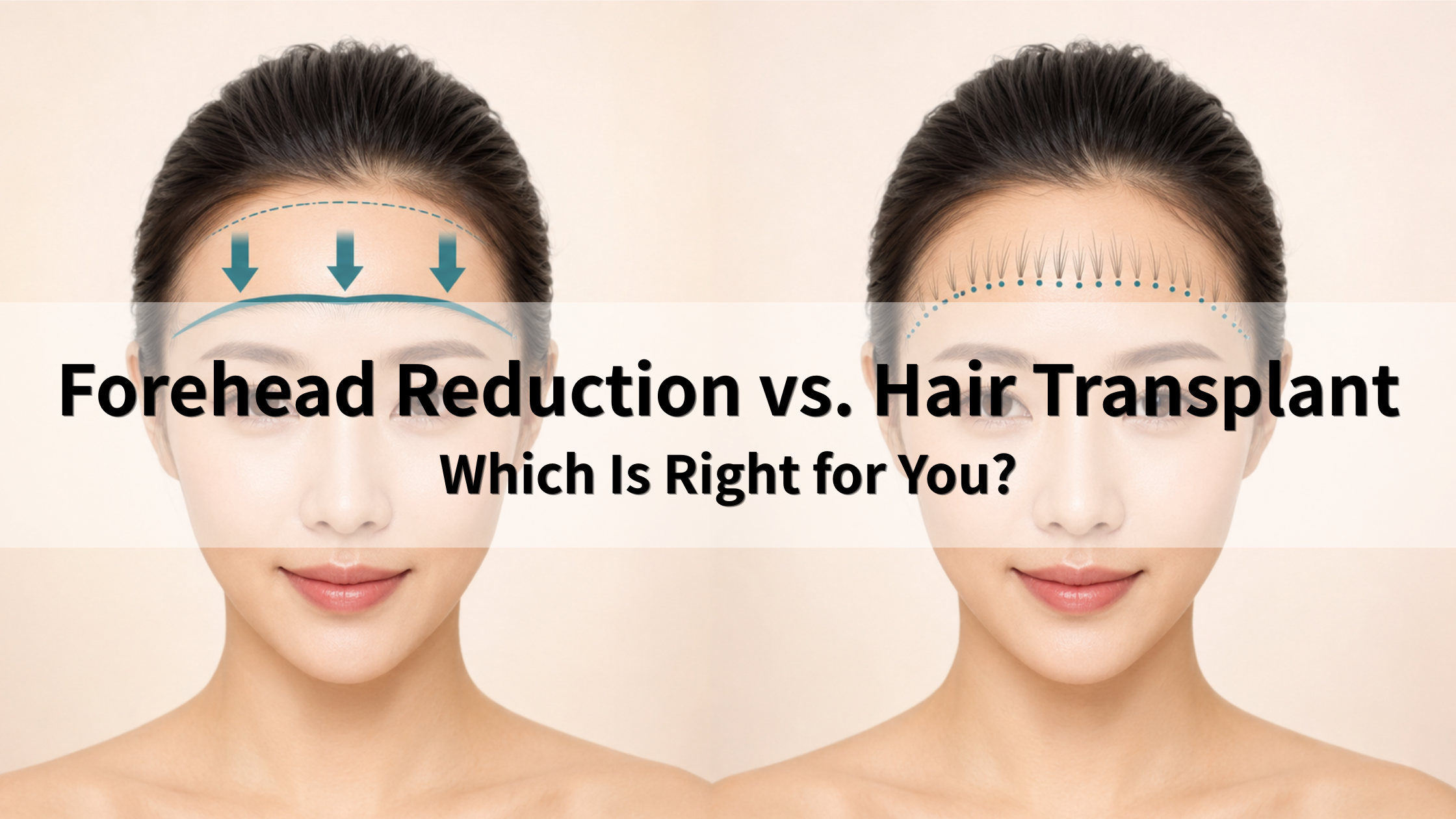
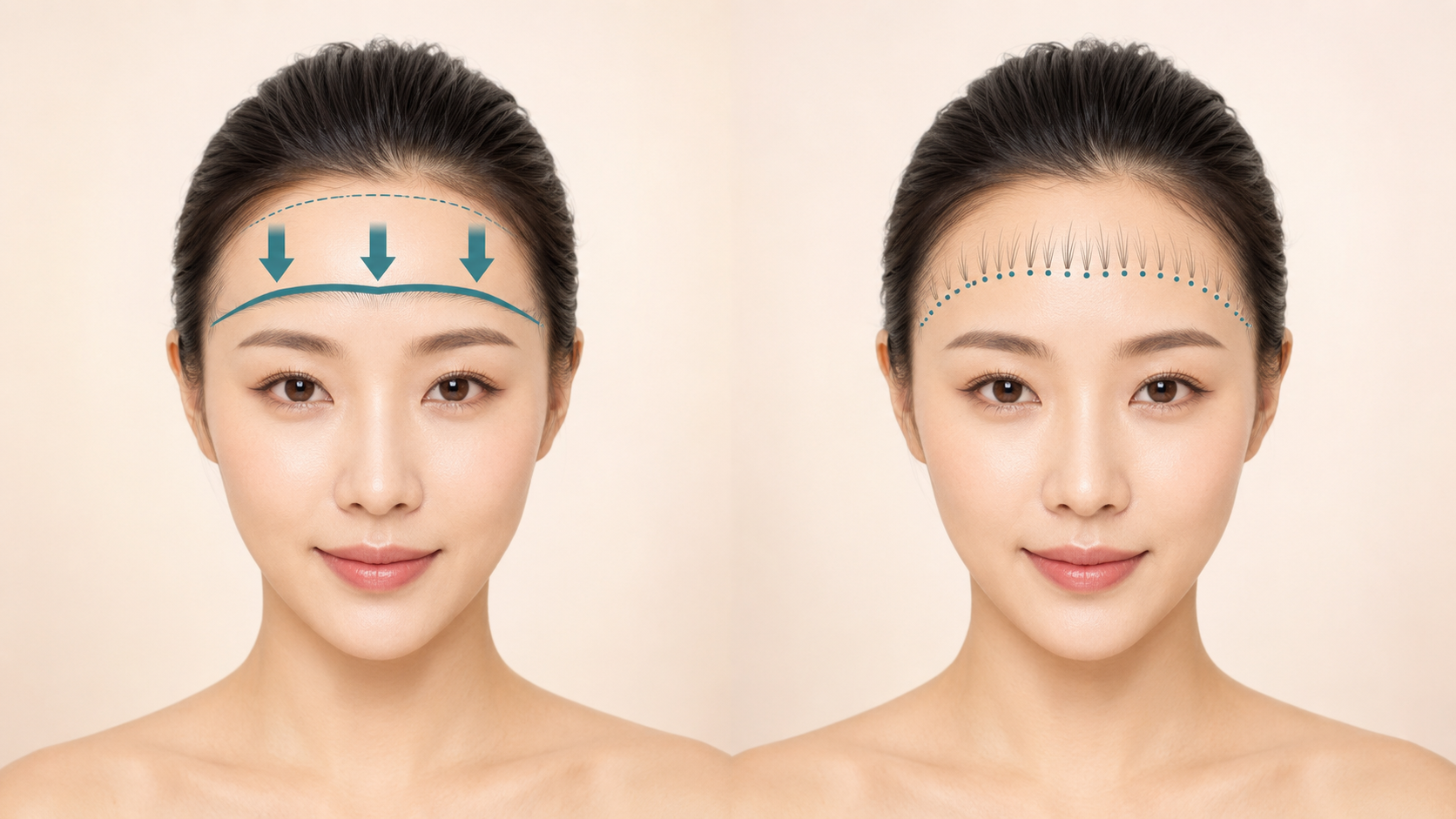
Research ways to fix a wide forehead and you will inevitably hit the same comparison: forehead reduction or a hairline hair transplant? Both bring the hairline forward, but the mechanisms could not be more different. Forehead reduction removes skin and physically shrinks the forehead's area; a hairline transplant moves your own hair to the hairline and brings it forward with hair.
The short answer: this is not about which is superior. The right method depends on the type of your concern and the change you want. This article compares the two across how the effect appears, longevity, the quality of the result, downtime, and scarring, then organizes who suits each and the cases where combining them is considered.
The Short Answer: Forehead Reduction vs. Hairline Transplant at a Glance
The sections below cover each method's character and who it suits.
Forehead Reduction: Shrinking the Area Itself
Forehead reduction removes skin on the forehead side along the hairline and advances the scalp forward for closure. The suture line becomes the new hairline, and the forehead's area itself is physically reduced.
Its strength is the size and certainty of the change. Within the scalp's laxity, the line can move on a centimeter scale, and the positional change is settled by the surgery itself. The new hairline is lined with your own original hair, so there is no need to build density or hair flow from scratch. Its weaknesses: it is an incisional operation, with swelling and downtime, and it leaves a linear scar at the hairline (a follicle-preserving beveled incision allows hair to grow through the scar and conceal it; per the official site). The achievable lowering is also constrained by the scalp's laxity.
Who it suits: those with a naturally high hairline who want a large, certain change in the forehead's area, the type whose upper face is clearly long by the facial-thirds ratio.
Hairline Hair Transplant: Supplementing with Hair
A hairline hair transplant harvests your own hair (typically follicles from the back of the head) and grafts it to the hairline. No skin is removed; the hairline is brought forward and reshaped with hair.
Its strength is fine-grained design: filling an M-shaped notch, rounding a squared line, creating a soft baby-hair gradient at the hairline. It excels at millimeter-scale, zone-by-zone correction, and some people prefer that it places no linear incision at the hairline. Its weaknesses are the wait and the uncertainty of density. Grafted hair sheds once before regrowing, so the finished look takes months to arrive. Graft survival varies by individual, and one session may not reach the density you want, putting an additional session on the table. Graft-site marks are dot-like and inconspicuous, but the donor site scars according to the method, and if the density or hair-direction design is off, the result can read as "planted." And for advancing a large area wholesale, the required graft count can become impractical.
Who it suits: those bothered less by the size than by the hairline's shape (M-shape, squared corners, an irregular line), those who want to avoid incisional surgery, and those for whom partial correction is enough.
The Axes of Choice: Shrink the Area, or Fill It with Hair?
The two methods are less rivals than tools with different specialties. There are three axes to the choice.
Axis 1: Is the concern the area or the shape? If the upper face is clearly long by the facial-thirds ratio (an area problem), forehead reduction, with its centimeter-scale movement, is the primary candidate. If the ratio is within range but the hairline's shape is irregular (a shape problem), the fine-correction specialists, transplantation and hairline design, come forward.
Axis 2: How do you weigh certainty against time? If you want the positional change settled by surgery, choose forehead reduction. If you will trade a months-long completion and density follow-up for avoiding an incision, choose the transplant.
Axis 3: Is the hairline actively receding? This premise applies to both options. If recession from AGA/FAGA or similar is progressing, lowering the line or planting hair alike can be undone by further recession. Before "which one," confirm through a hair diagnosis whether recession is active.
The Combination Option: Lower with Reduction, Refine with Grafts
Forehead reduction and transplantation are not an either-or; they can be combined. The classic division of labor: forehead reduction brings the hairline down by the large amount, then transplantation refines the line's shape, fills the temple-side notches, and builds the soft-hair gradient. Another design applies when the reduction cannot reach the target line because of the scalp's laxity: the remaining distance is covered with grafts.
Which combination fits is a judgment made after an examination evaluates three things: scalp laxity, the state of the hair, and the target line. Rather than committing to one method from the outset, consult on the premise that both options are on the table.
Frequently Asked Questions
Q1. Which leaves less scarring?
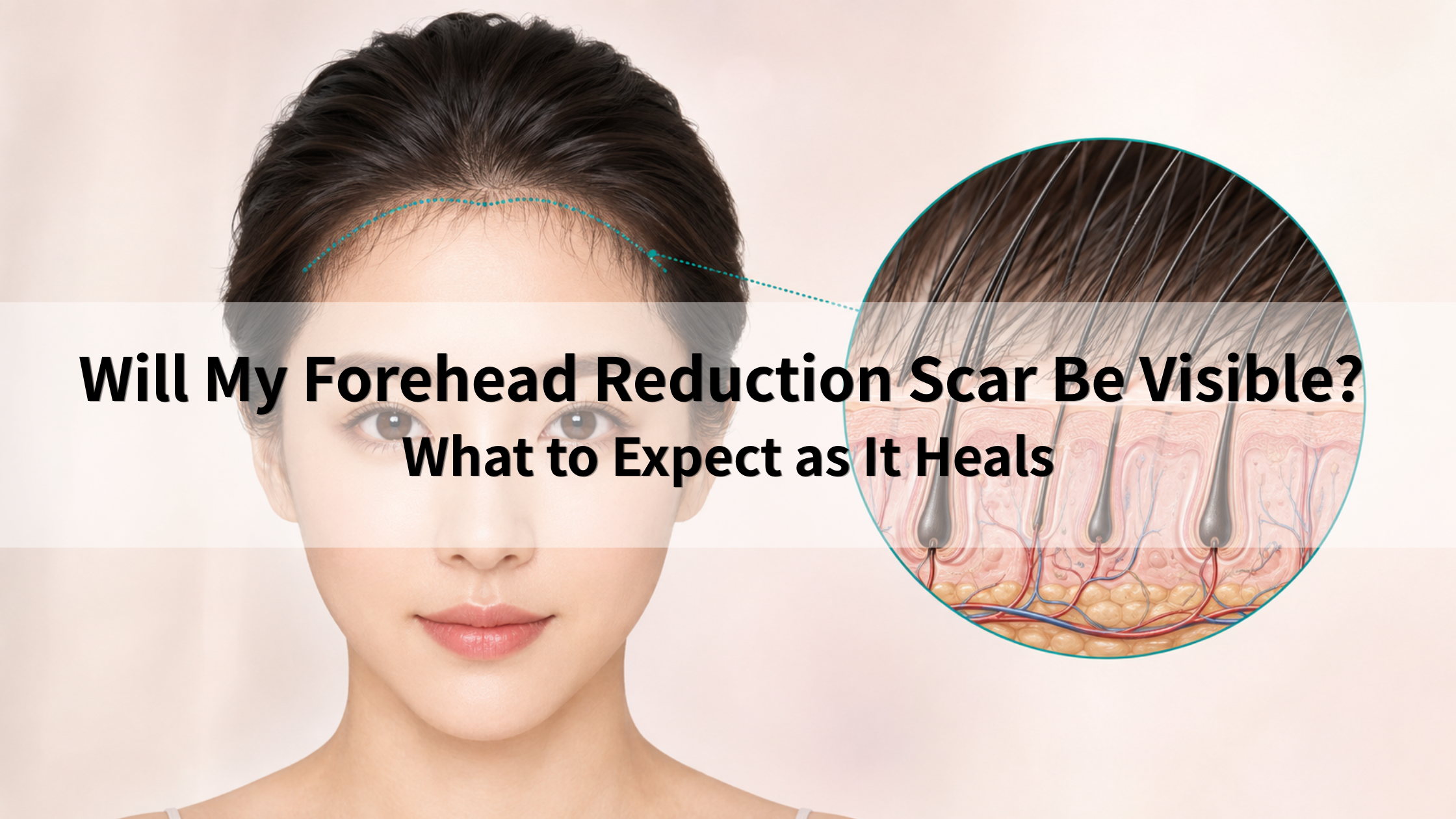
A. The scars differ in location and form, so there is no simple ranking. Forehead reduction leaves a line along the hairline, but a follicle-preserving beveled incision allows hair to grow through and conceal it. A transplant's graft sites are dot-like and inconspicuous, while the donor site scars according to the method. Your usual hairstyles (whether you wear the back short) and your constitution also matter, so review the specifics at an examination.
Q2. If I do both, which comes first?
A. The commonly considered order is the large positional change first (forehead reduction), then, once the wound and hairline have stabilized, transplantation to finish the shape and density. The design varies with your state and goals, though, and whether the two can be staged closely together is an individual judgment. If both are on your radar, say so at the first consultation and have the plan built on that premise.
Q3. My hairline is receding. Which should I choose?
A. Before either, the first step is a hair diagnosis to determine whether the recession is active. Change the position while recession is progressing, and later recession can undo the result. The principled order: confirm the recession has stabilized (with treatment if needed), then weigh forehead reduction, transplantation, or a combination.
Conclusion: Choose by the Type of Concern, Not by Superiority
Forehead reduction physically shrinks the forehead's area; its strengths are certain, centimeter-scale change and the naturalness of your original hair becoming the new line as-is. A hairline transplant supplements with hair; its strengths are fine shape correction and avoiding an incision, traded against a months-long completion and density management. An area problem points to forehead reduction, a shape problem to transplantation, both to a combined design, and active recession to a hair diagnosis before anything else. Think in that order, and you reach your own answer by the shortest path.
If you would like to know which type your concern is, feel free to reach out through Respect Plastic Surgery's official WhatsApp for an online consultation.
 Google Maps