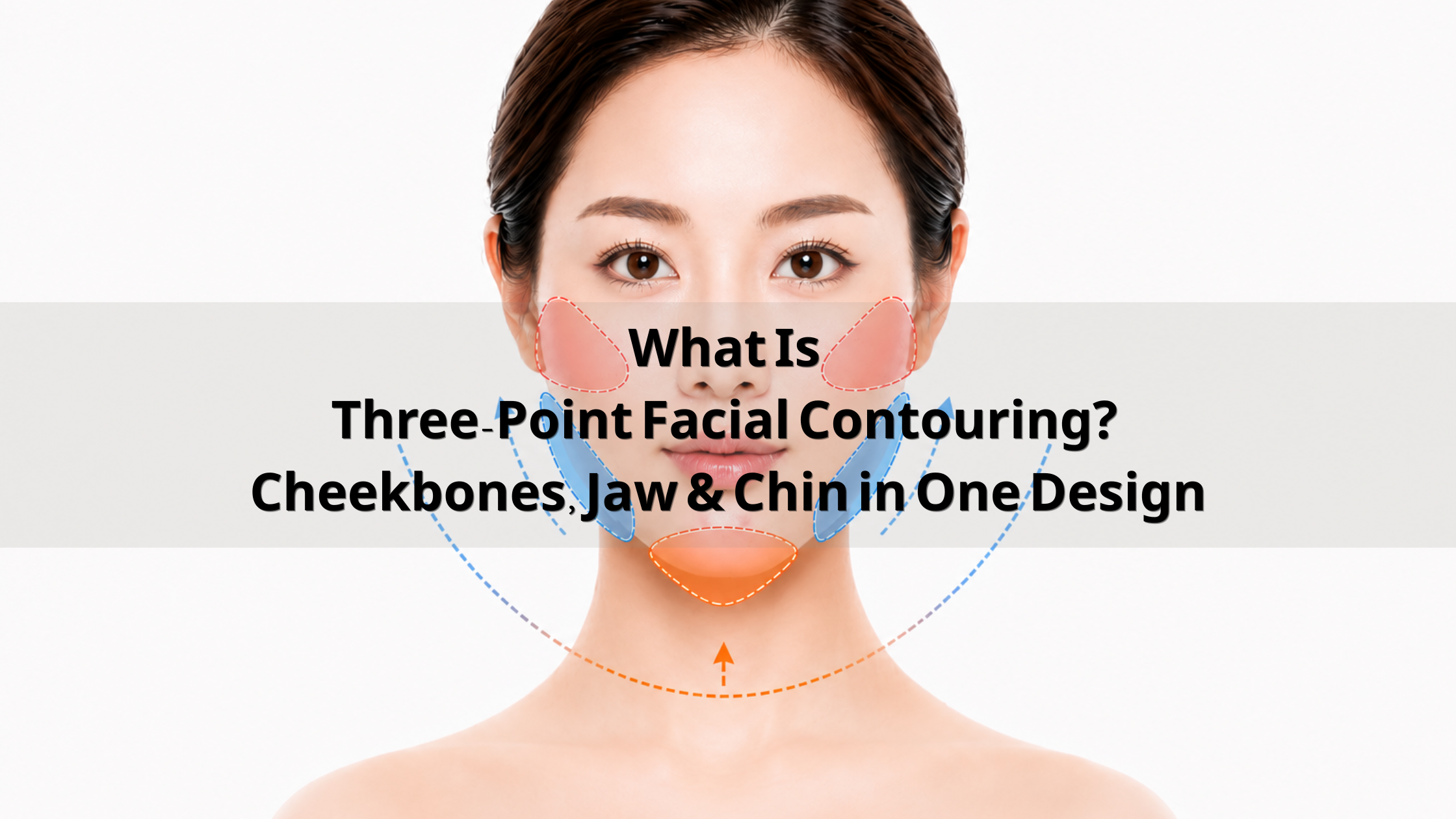
"My cheekbones, jaw, and chin all bother me. If I'm going to do everything, what's the right way?"—In fact, few people have a contouring concern in just one spot, because the facial outline is a single connected line.
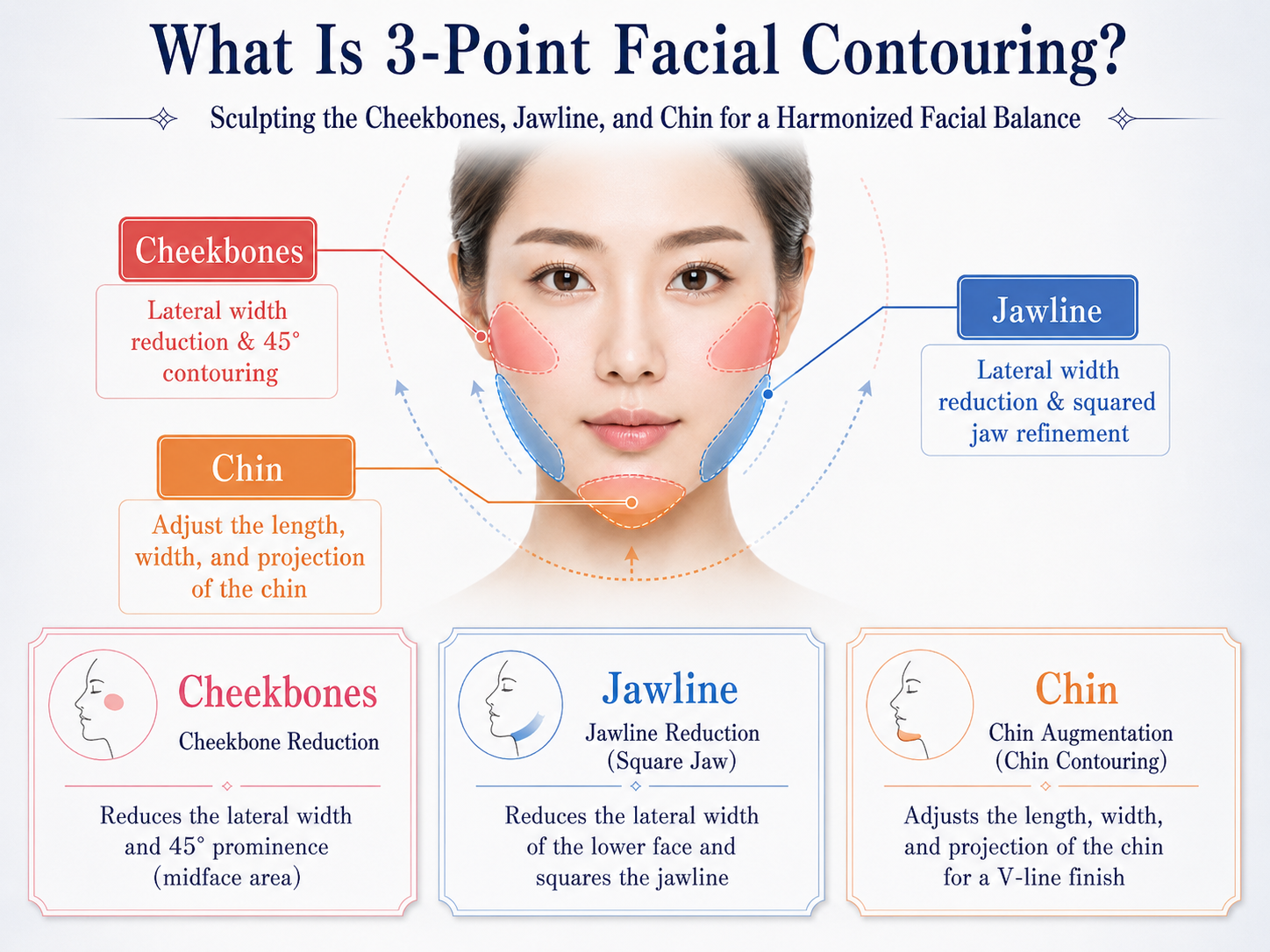
Three-point facial contouring means performing three procedures at once—cheekbone (zygoma) reduction, jaw-angle reduction, and genioplasty (chin / anterior-jaw surgery)—to shape the entire facial outline as one design. In Korea it is widely known as "three-point contouring."
This article explains the role of each of the three procedures, why they are done together, the surgical process, and who they suit.
What Three-Point Facial Contouring Is
Three-point facial contouring performs surgery on the following three areas in a single operation.
In fact, in jaw-angle surgery at Respect Plastic Surgery, procedures such as anterior-jaw surgery are performed in parallel as symptoms require, taking an approach that completes a chin that looks beautiful from every angle. Three-point contouring extends this idea of "combining areas to design the whole outline" across the entire face, cheekbones included.
Why a "Set of Three"? The Outline Is One Connected Line
The facial outline is a single connected line: from below the ear → jaw angle → chin tip → the opposite jaw angle → below the ear, and on to the cheekbones. So when only one area is refined, things like this can happen:
Reduce only the jaw angle, and if the cheekbones still protrude, the mid-face width remains and the slimming effect is halved
Refine the cheekbones and jaw angle, but if the chin stays long or wide, the V-line is not completed
Conversely, refine only the chin tip, and if the jaw-angle flare remains, the line does not connect smoothly
What matters is that the goal of contouring surgery is not "to make each bone smaller," but to create a line suited to the balance, harmony, and proportions of the whole face. Designing all three points at once lets you decide the amount of movement and the angle for each area within a single blueprint.
The Role of Each of the Three Procedures
① Cheekbone Reduction — Refining Mid-Face Width and Contour
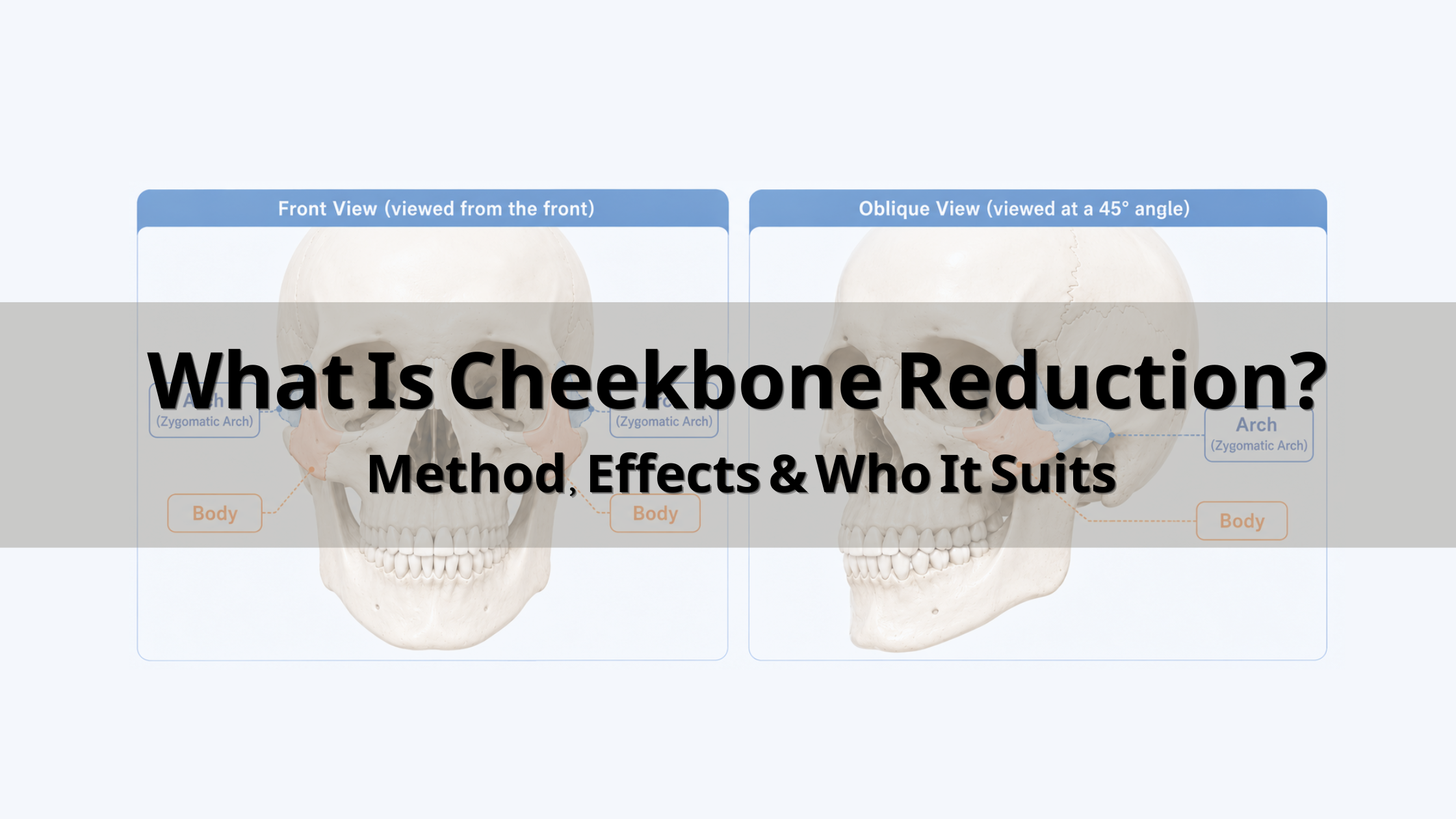
The cheekbone is cut in an L-shape, moved inward, and firmly double-fixed front and back with a titanium plate. Because it is done through an incision inside the mouth with minimal dissection, it creates a smooth egg-shaped facial line from any angle while limiting concerns about cheek sagging.
② Jaw-Angle Reduction — Slimming the Lower Face
The jaw angle is cut in a long, curved line to create a natural jawline with no secondary angle (a new angle formed at the cut edge). The jaw angle is not over-reduced but preserved and adjusted naturally. Depending on the condition, masseter (jaw-muscle) reduction and buccal fat removal are performed at the same time, addressing bone, muscle, and fat together.
③ Genioplasty — Completing the V-Line
The chin-tip bone is moved using techniques such as shortening, advancement, and T-cut to adjust its length, width, and forward–backward position. This is the key surgery that finishes the "end point" of the line continuing from the jaw angle and completes the V-line.
Advantages of Doing Them Together
Design from one blueprint: the movement and angle of all three areas can be worked back from the proportions of the whole face, giving the entire line consistency
One round of anesthesia and surgery: compared with having each area done separately, general anesthesia and the recovery period are combined into one
A seamless result: because the same surgeon refines the cheekbone → jaw-angle → chin junctions at the same time, a smoothly connected line can be aimed for
The Three-Point Surgery Process
Consultation and 3D CT analysis: not only bone but also soft tissue such as muscle, fat, and skin is precisely analyzed in three dimensions to grasp the three areas spatially
Overall design: the movement and angle of the cheekbones, jaw angle, and chin are set as a single blueprint to match the balance and proportions of the whole face
Surgery: the three areas are cut, moved, and fixed at the same time (general anesthesia)
Recovery and follow-up: return to daily life while monitoring how the swelling progresses
Who Three-Point Facial Contouring Suits
People bothered by two or more of the cheekbones, jaw angle, and chin tip
People who want to change the impression of the whole face (a smaller face, egg shape, V-line) rather than a partial change
People who feel the face has a lot of empty space or that the outline looks uneven
People who want to address facial asymmetry across the whole outline
People who want to combine the number of trips to Korea and rounds of anesthesia
That said, not everyone needs all three points. When the cause of the concern is limited to one or two areas, surgery on just those areas may be enough. The correct order is to decide how far to go during consultation, based on the results of the 3D CT analysis.
Changes You Can Expect
A small, slim face: width and empty space are refined, giving the whole face a more compact impression
A three-dimensional V-line: a smooth line from the front, the side, and a 45° angle
A soft, refined impression: the harsh look from flare and angularity is eased
Balanced features: the harmony that comes from refining by proportion rather than by part
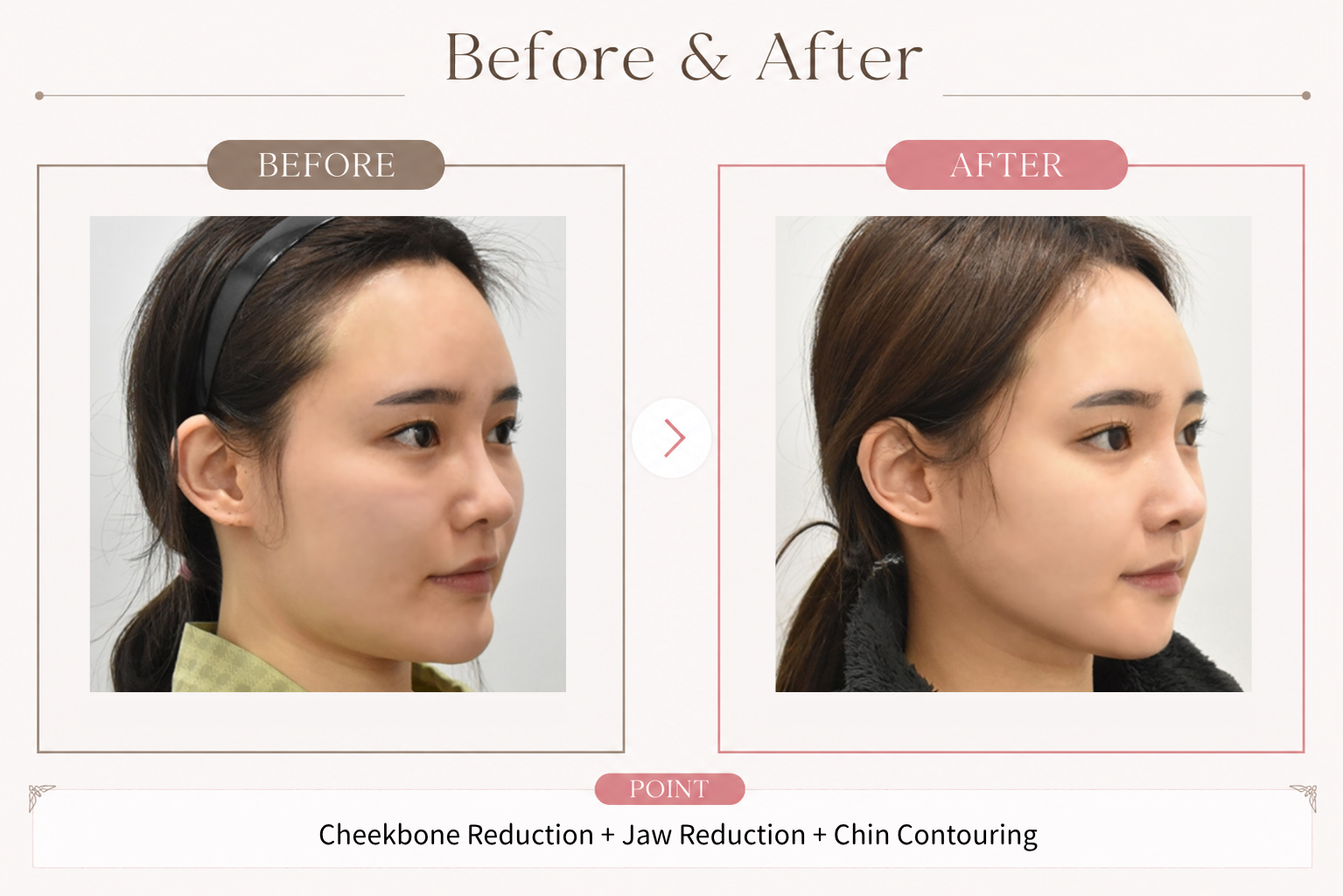
Case Photos
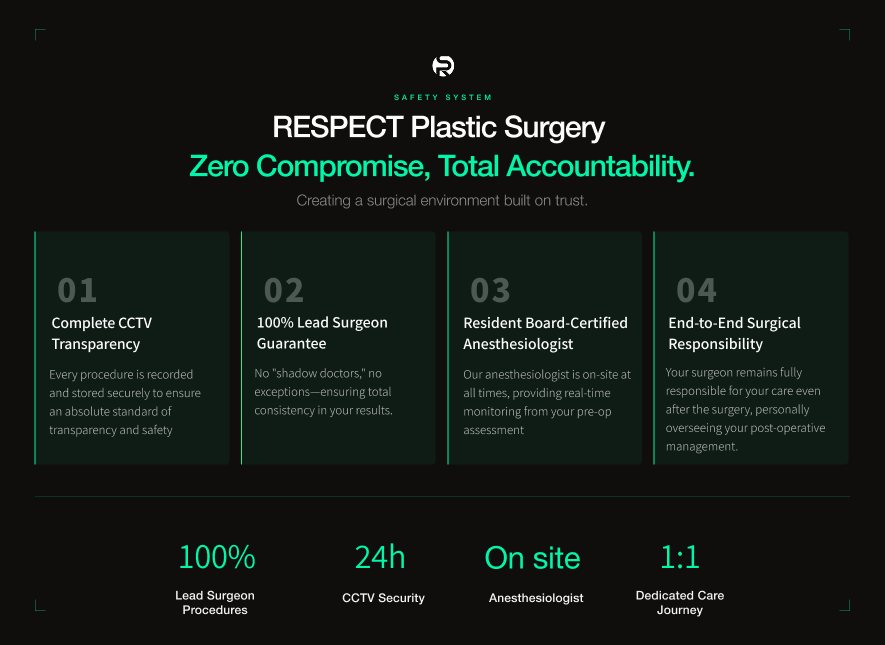
Respect's Safety System
Precisely because this surgery addresses three areas at once, Respect Plastic Surgery has medical staff with exceptional confidence and know-how in facial contouring take responsibility for care from start to finish, and has put in place a system that lets you undergo surgery with peace of mind.
✅ Anesthesia management and intraoperative monitoring by a board-certified anesthesiologist
✅ Emergency-response equipment, backup power, and other emergency systems
Frequently Asked Questions (FAQ)
Q. Do I have to have all three points done as a set? A. No. When the cause of the concern is in one or two areas, surgery on just those areas may be more suitable. After checking the state of bone, muscle, and fat with 3D CT analysis, we will propose the range that is needed.
Q. With three areas at once, what about surgery time and swelling? A. Because the surgical range is wider, surgery takes longer than for a single area, and the degree and duration of swelling vary from person to person. The specific schedule is explained during consultation.
Q. Which is better, having them done separately or at the same time? A. The biggest advantage of doing them at the same time is being able to design the three areas from one blueprint and combining anesthesia and the recovery period into one. On the other hand, depending on the burden on the body and your wishes, having them done separately is also an option, judged according to your condition.
Q. If I travel from overseas, how long do I need to stay? A. The length of stay, including post-op follow-up, varies with the surgical range. In an online consultation before traveling to Korea, we will explain the flow from arrival to returning home.
Summary — Three-Point Contouring Is Not "Three Surgeries" but "One Design"
Three-point facial contouring performs cheekbone reduction, jaw-angle reduction, and genioplasty at once, designing and refining the facial outline—a single connected line—from the proportions of the whole. What matters is not shaving three places, but deciding, within one blueprint, where and how many millimeters to move to fit the balance and harmony of the whole face. For that, 3D CT analysis and the experience of a contouring specialist are essential.
If you want to know whether you need all three points, or how far is enough, please use an online consultation via the Respect Plastic Surgery official LINE.
Note: General complications that can occur after surgery, such as bleeding, infection, and inflammation, vary from person to person. This article is intended to provide general information; actual suitability is determined after an examination.

 Google Maps