Why Your Profile Might Look "Off" Even After a Nose Job...
If you've ever looked at your side profile and felt like something was still not quite right — even after considering rhinoplasty — the answer may not be your nose at all. It could be your nasolabial angle (also called the "columella-labial angle," or 비순각 in Korean): the angle formed where the base of your nose meets your upper lip.
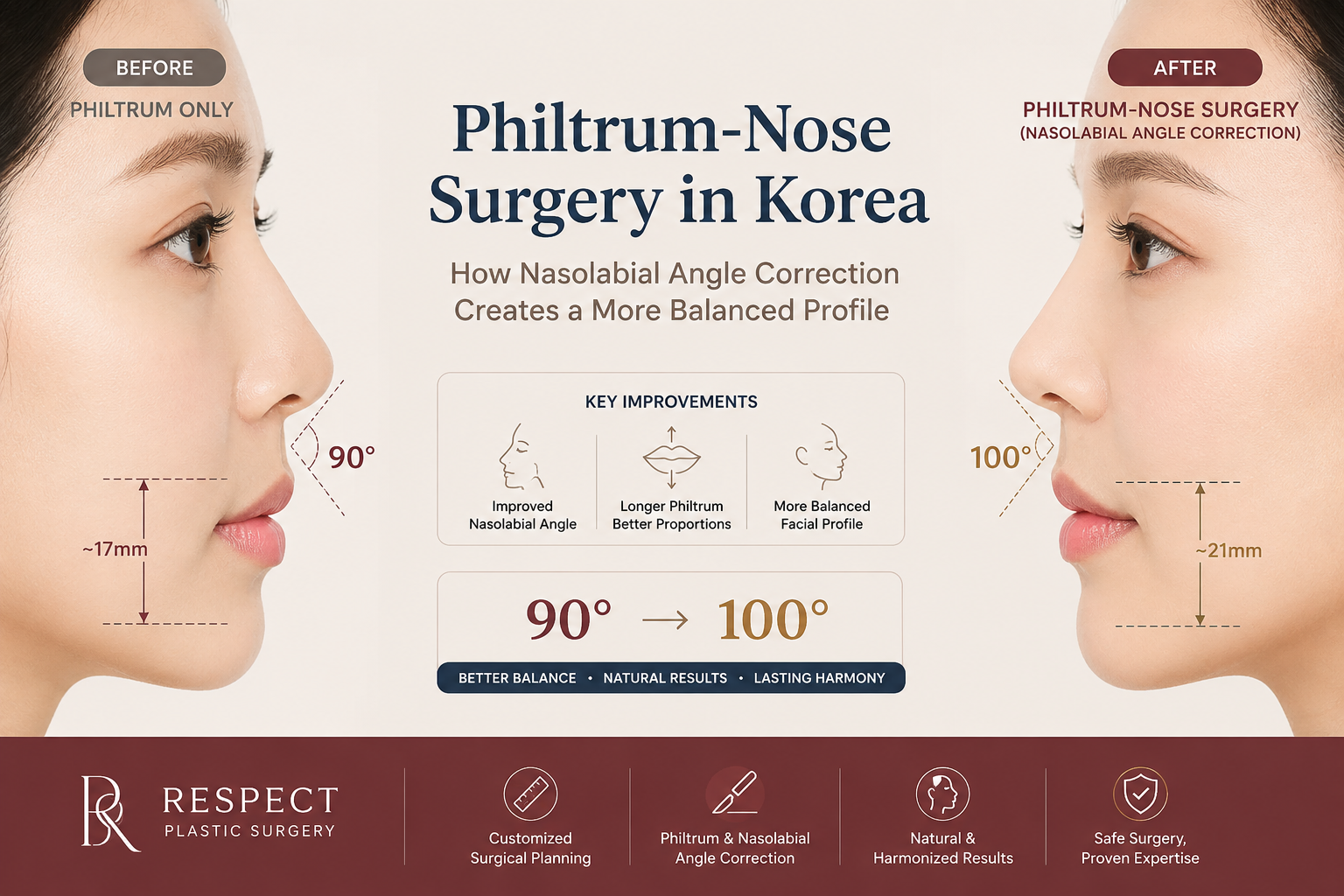
A nasolabial angle that's too small (acute) can make the mouth look like it's jutting forward, the upper lip appear puffy or "duck-like," and the nose tip look droopy — no matter how high the nasal bridge is. This is one of the most overlooked factors in facial profile aesthetics, and it's the exact problem that philtrum-nose surgery (인중코성형) is designed to solve.
What Is Philtrum-Nose Surgery?
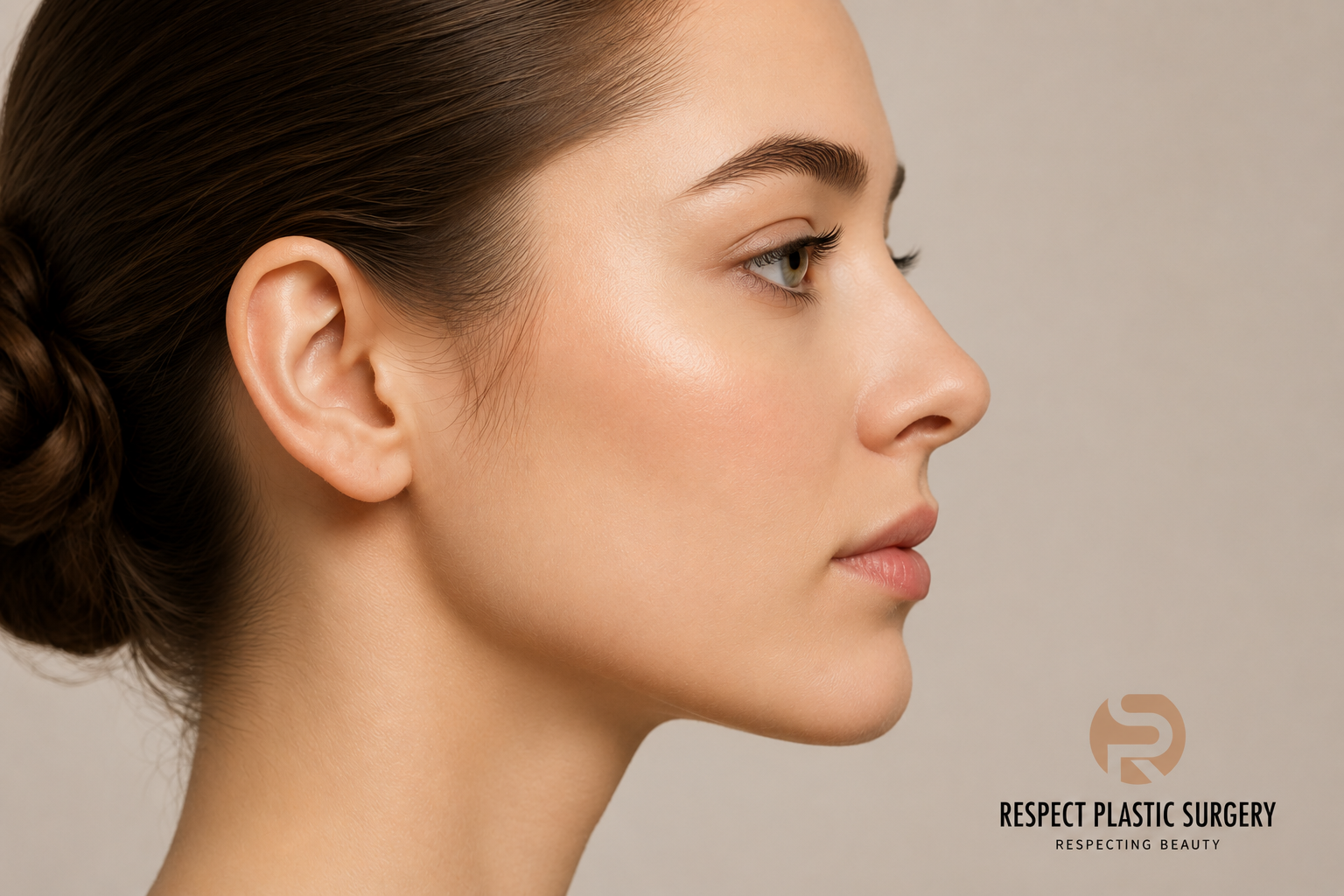
Philtrum-nose surgery is a combination procedure that simultaneously reshapes the nasal bridge and tip while correcting the angle of the nasolabial region (the area between the nose and the philtrum/upper lip). Rather than treating the nose as an isolated feature, this approach evaluates the nose, philtrum, and lip as one interconnected unit.
At Respect Plastic Surgery, this procedure is marketed under the name "Respect Philtrum-Nose Surgery," with the nasolabial-angle correction technique registered as a trademark in South Korea (Registration No. 40-2176407, registered April 2024) under lead surgeon Dr. Kong Jeong-sik.
Why Some Profiles Look Naturally Balanced — And Others Don't
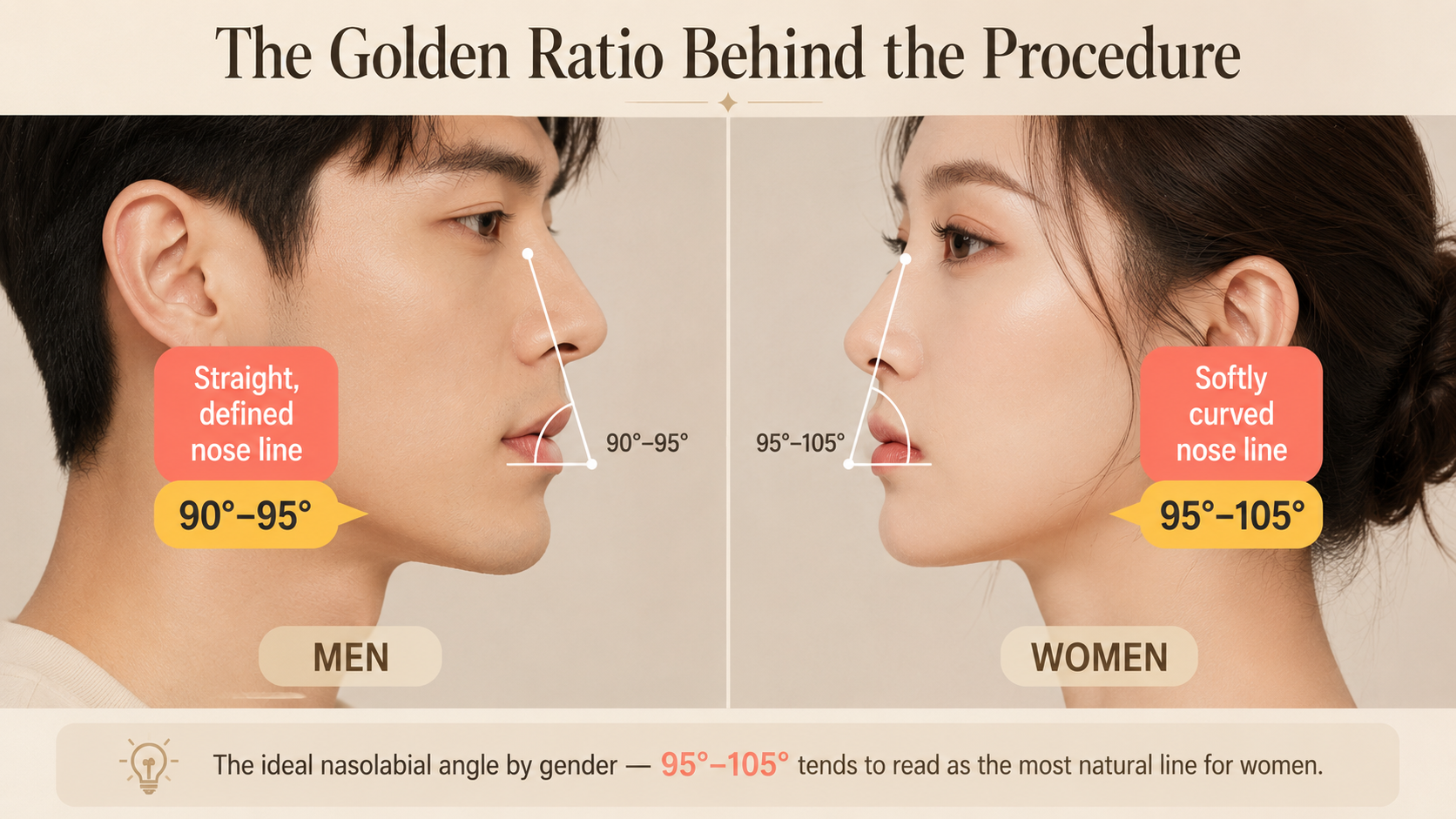
Facial aesthetics research generally points to an ideal nasolabial angle of:
- 95°–105° for women (a softer, more curved nasal base line)
- 90°–95° for men (a straighter, more angular line)
When this angle falls outside the ideal range — particularly when it's too acute — the mid-face can look flat, the mouth can appear to protrude, and even a well-augmented nose bridge can look "less high" than it actually is. Correcting the nasolabial angle alone, without changing bridge height at all, can make the same nose appear noticeably taller and the entire face more three-dimensional.
Who Is a Good Candidate?
You may be a candidate for philtrum-nose surgery if you experience any of the following:
- A nose that looks like it's "drooping" or the tip points downward
- A mouth or lip area that appears to protrude ("duck lips" or oripgu)
- A flat or short columella (the strip of skin between the nostrils)
- A previous rhinoplasty that raised the bridge but didn't fully resolve profile balance
- A naturally short or retracted nasolabial angle combined with a low nasal bridge
Importantly, clinics note that even patients who feel their mouth "sticks out" are often not candidates for jaw or lip surgery — the real cause is frequently an underdeveloped nasolabial angle, which can be corrected through the nose itself.
What Happens During the Procedure
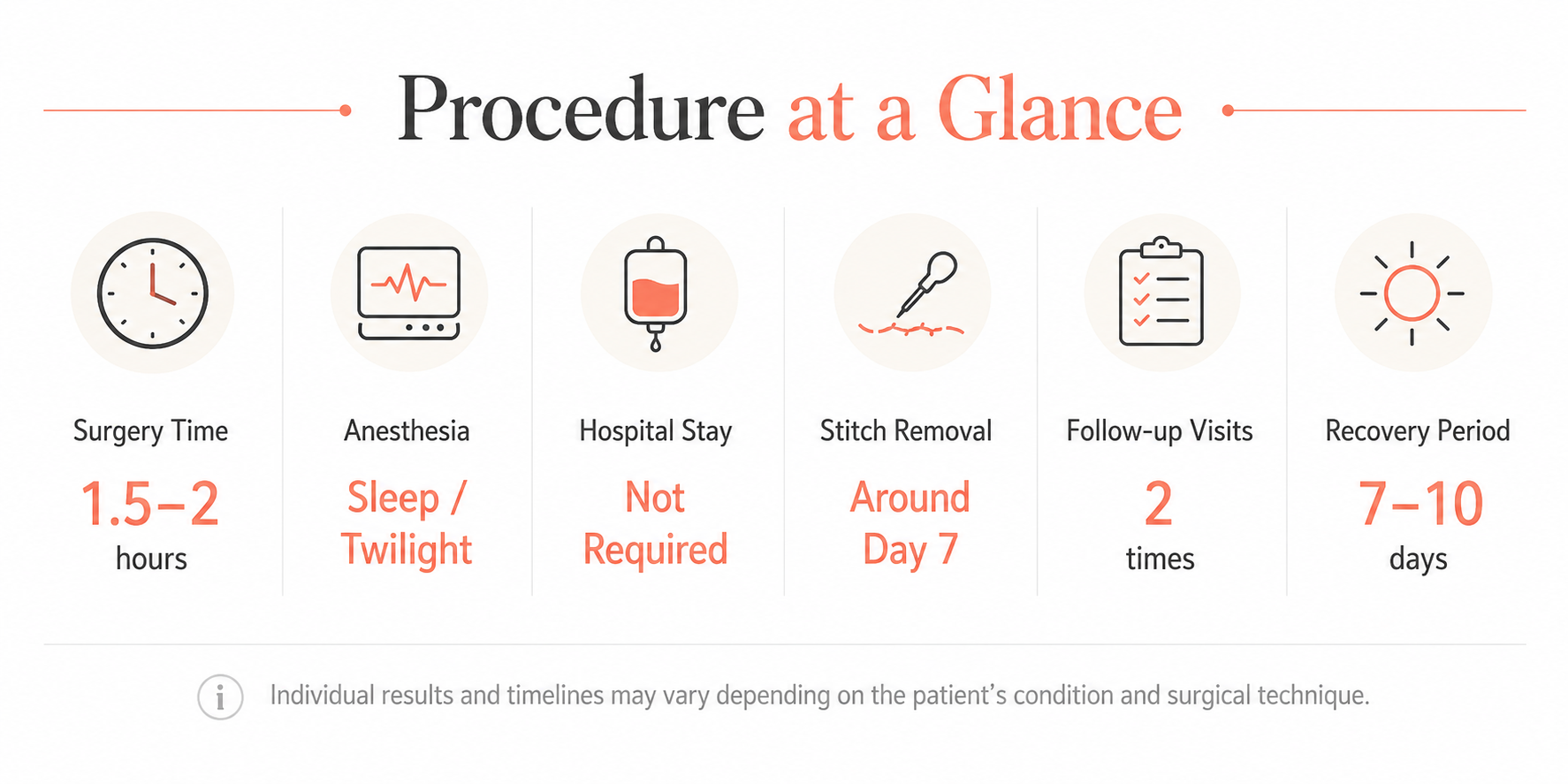
| Detail | Information |
|---|---|
| Surgery time | Approximately 1.5–2 hours |
| Anesthesia | IV sedation (twilight/"sleep" anesthesia) |
| Hospital stay | Not required (outpatient) |
| Stitch removal | Around 7 days post-op |
| Follow-up visits | Typically 2 in-clinic visits |
| Recovery period | Approximately 7–10 days |
Note: Exact timelines vary depending on individual anatomy and the specific surgical technique used.
The surgeon typically performs a precise, multi-point analysis before surgery — measuring nasal height, length, width, tip angle, and the nasolabial angle itself — often using anatomical models to explain the plan to the patient. Because the columella and cartilage structure are adjusted together with the nasal base, results tend to look natural rather than "operated on," and nostril shape is designed to stay proportionate rather than becoming elongated, which is a common complication of standalone tip-plasty procedures.
Philtrum-Nose Surgery vs. Standard Rhinoplasty
A common question prospective patients ask is: "Isn't this the same as a regular nose job?" Not quite. Here's the distinction:
- Standard rhinoplasty typically focuses on bridge height, tip projection, and nostril symmetry.
- Philtrum-nose surgery adds a layer of correction at the base of the nose and the columella-lip junction, directly targeting the nasolabial angle.
Comparative before/after imaging shows that raising the bridge by the same 5mm produces a visibly different (and often better-balanced) result when the nasolabial angle is corrected at the same time, compared to bridge augmentation alone.
Why the Nasolabial Angle Gets Overlooked in Standard Rhinoplasty
Most conventional rhinoplasty techniques are built around the nose as a self-contained structure: the surgeon works on the bony bridge, the cartilage at the tip, and the nostril base, then closes up. The columella — the small strip of skin and cartilage separating the nostrils — and the angle it forms with the upper lip are often left untouched, simply because they sit at the boundary between "nose" and "face" rather than inside the nose itself.
The problem is that this boundary area carries a disproportionate amount of visual weight in a side profile. If the nasolabial angle is too acute going into surgery, it will usually still be too acute coming out of it, even if the bridge itself looks great. That's the scenario many patients describe as "I got a nose job, but my profile still looks the same" — the bridge changed, but the base of the nose and the angle framing the mouth never did.
What Philtrum-Nose Surgery Adds Structurally
Philtrum-nose surgery treats the columella, the nasal spine area, and the soft tissue at the base of the nose as part of the surgical plan rather than a fixed boundary. Depending on the patient's anatomy, this can involve:
- Repositioning or augmenting the columella to change how it meets the lip
- Adjusting the angle where the septal cartilage exits the nose
- Coordinating the height of the new bridge with the new base angle, so the two don't end up mismatched
Because these adjustments happen at the same time as the bridge and tip work, the surgeon can plan the entire profile as one continuous line — from the forehead down through the bridge, the tip, the base, and into the lip — rather than optimizing the middle of the nose in isolation.
Same Millimeters, Different Outcome
This is why the 5mm comparison matters: two patients can receive the exact same amount of bridge height, yet look meaningfully different afterward. Without nasolabial angle correction, a 5mm increase can still leave the tip looking slightly heavy or downturned, and the mouth can continue to look like it's leading the profile. With the angle corrected at the same time, that same 5mm reads as a taller, more resolved nose, because the base is now supporting the new height instead of counteracting it. In effect, the nasolabial angle acts as the "frame" for whatever height and shape work is done above it — get the frame right, and the rest of the result looks more intentional.
A Practical Way to Think About It
If a standard rhinoplasty answers the question "How do I want my nose to look on its own?", philtrum-nose surgery answers a slightly different one: "How do I want my nose, philtrum, and mouth to look together, from the side?" For patients whose primary complaint is bridge height or tip shape with no profile-balance concerns, standard rhinoplasty alone may be sufficient. But for anyone whose main frustration is a protruding mouth, a downturned tip, or a profile that still looks "off" despite a good bridge, the nasolabial angle is usually the piece a standard rhinoplasty was never designed to address.
Frequently Asked Questions
Q. Can philtrum-nose surgery fix a "duck lip" appearance?
A. Yes. When the nasolabial angle is too acute, the upper lip and mouth can appear to jut forward. Elevating and correcting this angle can visually reduce the appearance of a protruding mouth without any lip or jaw surgery.
Q. Does this procedure only adjust the nasolabial angle, or does it also involve the nose?
A. It addresses both. Because the nose and the nasolabial angle are structurally connected, the procedure is designed to treat them together for a proportionate, natural-looking result based on individual facial ratios.
Q. Is general anesthesia required?
A. No — most patients undergo the procedure under IV sedation ("sleep anesthesia") rather than general anesthesia, and hospitalization is not typically necessary.
Q. How long is the recovery?
A. Most patients can expect stitches to be removed around day 7, with visible swelling subsiding within roughly 7–10 days, though full results take longer to settle.
Considering Nose Surgery in Korea?
South Korea remains one of the most established destinations for facial plastic surgery, with clinics that specialize in profile-specific procedures like nasolabial angle correction — something far less commonly offered as a standalone specialty in Western markets. If your concern has always been "why doesn't my nose job fully fix my profile," the nasolabial angle may be the missing piece.
As with any surgical procedure, results vary by individual anatomy, and a thorough in-person (or video) consultation with a board-certified surgeon is essential before deciding on any technique.

 Google Maps